8th Stage Hildegard of Bingen Pilgrimage Trail: Stromberg - Bingen am Rhein

Stromberg – Warmsroth – Morgenbachtal – RheinBurgenweg - Bingerbrück With scenic...

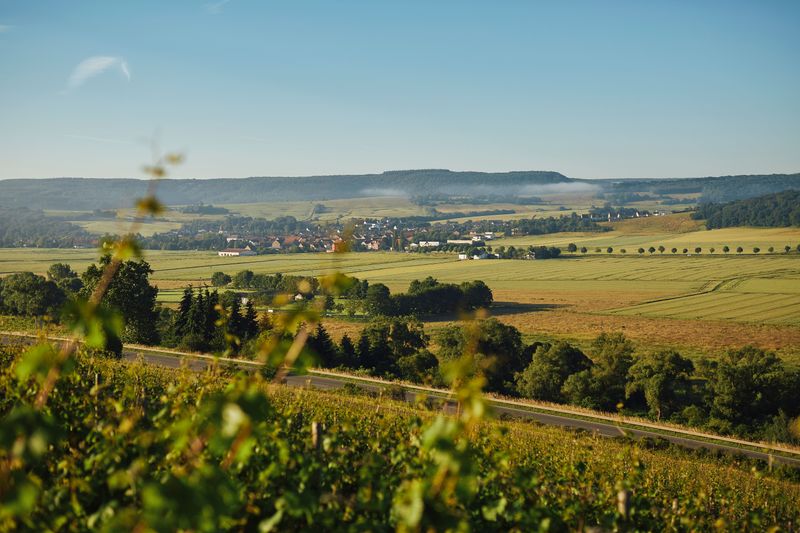
The stage begins at the St. James Church in Stromberg, and thus also on the Camino de Santiago. Pilgrims can engage with the vision of the third book of Scivias at the meditation panel "End of Times". This vision has made Hildegard famous as an apocalyptic seer. The route continues through Warmsroth with the St. Pancratius Chapel into the Binger Forest and to the last meditation panel of the pilgrimage route. After taking in the view of the Upper Middle Rhine Valley, which has been a UNESCO World Heritage Cultural Landscape since 2002, the view opens up at Prinzenkopf to the Rhine Valley with Bingen and Rüdesheim.

The Hildegard of Bingen Pilgrimage Trail
Hildegard of Bingen, abbess, poet, theologian, naturalist, and healer, lived her entire life in the present-day Nahe vacation region.

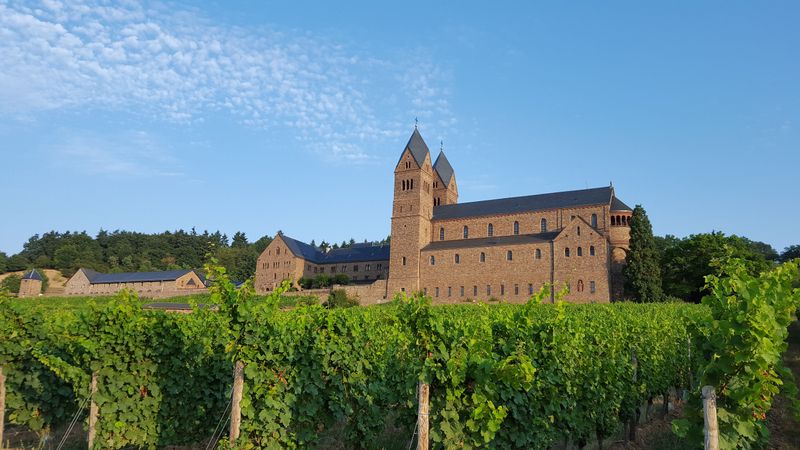
The 137-kilometer-long Hildegard of Bingen Pilgrimage Trail passes various life stations of this perhaps most famous personality of the Middle Ages. The trail starts in Idar-Oberstein and continues through Niederhosenbach, the family seat and possible birthplace of Hildegard of Bingen, to Bad Sobernheim. Not far from here is the Disibodenberg monastery ruin, where Hildegard spent almost 40 significant years of her life. The pilgrimage trail ultimately ends in Bingen on the Rhine. Here, the Rupertsberg vaulted cellar still bears witness to Hildegard of Bingen's last place of work: In 1150, the saint founded the Rupertsberg monastery, which was her place of creation for 29 years. The final stations of this ecumenical pilgrimage trail are the Hildegard shrine in the pilgrimage church of St. Hildegard Rüdesheim-Ebingen and the Abbey of St. Hildegard Ebingen.

59 information and meditation panels along the entire route provide information about Hildegard's person, her work, and life in the Middle Ages. The spiritual side of Hildegard of Bingen is approached by hikers through meditation panels that follow Hildegard of Bingen's visionary images from her main work "Silvias - Know the Ways" and provide impulses for meditation. The panels are written in both German and English.

The pilgrim's passport can be stamped at Naheland-Touristik GmbH, tourist information centers, gastronomy and accommodation businesses, various way stations, and finally at the Abbey of St. Hildegard in Eibingen.

Short biography of St. Hildegard of Bingen

1098: Birth of Hildegard of Bingen, presumably in Niederhosenbach near Herrstein
1112:

Entry into the Disibodenberg monastery near Bad Sobernheim, together with Jutta of Sponheim

1136: Hildegard of Bingen becomes the second magistra at the Disibodenberg monastery after the death of Jutta of Sponheim

around 1150: Foundation of a women's monastery in Bingen on the Rhine
1165: Foundation of a second women's monastery in Eibingen, the present pilgrimage church of St. Hildegard Rüdesheim-Eibingen

September 17, 1179: Hildegard of Bingen dies in Bingen on the Rhine

May 10, 2012: Canonization of Hildegard of Bingen by Pope Benedict XVI

October 7, 2012: Elevation to Doctor of the Church
Total Distance Pilgrimage Trail

Length
approx. 10 km
Duration
approx. 5 hrs
Difficulty
2/3
Fitness
4/6
Experience
4/6
Landscape
4/6
Ascent
385 m elev.
Descent
524 m elev.
Season recommendation
Jan
Feb
Mar
Apr
May
Jun
Jul
Aug
Sep
Oct
Nov
Dec
Scenic Resting opportunity Stage tour From A to B geological highlights cultural / historical
8
8
8
8

Additional information

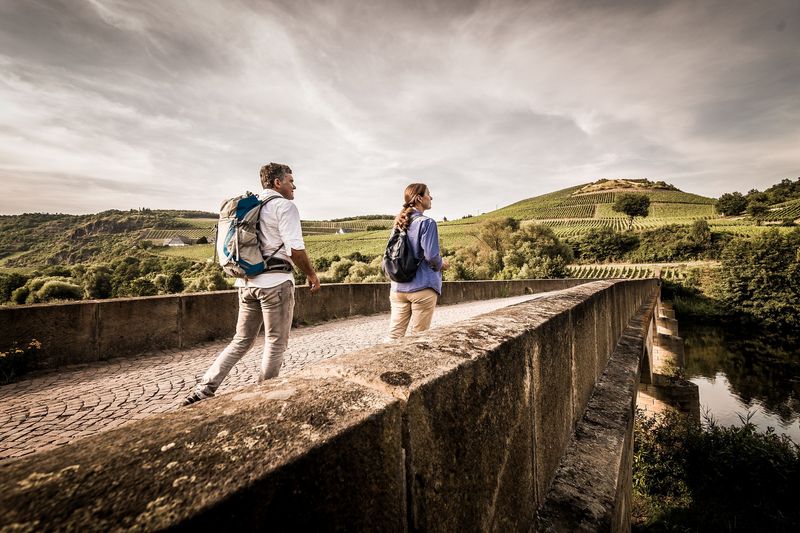
The eighth stage is the last major hiking stage on the Hildegard Trail and leads through the wonderful landscape of the Binger Forest with Soonwaldsteig, Rhine Castle Trail, and with a view of the Rhine to Bingen. The morning begins at the St. James Church, whose name already indicates that we are also on the Camino de Santiago here. There stands the meditation panel on the "End of Times" (Panel 53), which connects to the panels of yesterday's seventh stage and indicates the theme of today's day: We are dealing with Hildegard's apocalyptic visions for which she was long almost exclusively known. From Stromberg, the Hildegard Trail then leads to the nearby Warmsroth. At the local St. Pancratius Chapel, which dates back to the 15th century but was shaped in 1716 and has belonged to the Langenlonsheim-Stromberg community since its renovation (1979 - 1985), the next meditation panel stands (Panel 58: "The Day of Great Revelation"). Passing a stately estate, the path then sharply turns left into the Waldalgesheimer Forest. There, at the peace forest, is the last meditation panel on the Hildegard Trail. The theme "The Choirs of the Blessed" invites one to sit down, listen to music, and perhaps also reflect on life and death and the so-called "Last Things". (Panel 55 - Music "O gloriossimi lux"). From now on, a wonderful hiking trail awaits us to Bingerbrück without further Hildegard panels.

The hiking trail initially goes through the "Steckeschlääferklamm", which may remind us of a fairy tale forest with its surprisingly appearing carved figures in the trees. After that, the hiker, who is now about halfway through today's eighth stage, deserves a break. The Jägerhaus invites you to rest in the middle of the forest, where vegetarian food is also available today. From the Jägerhaus, the path leads slowly down through the Morgenbachtal in the Binger Forest.

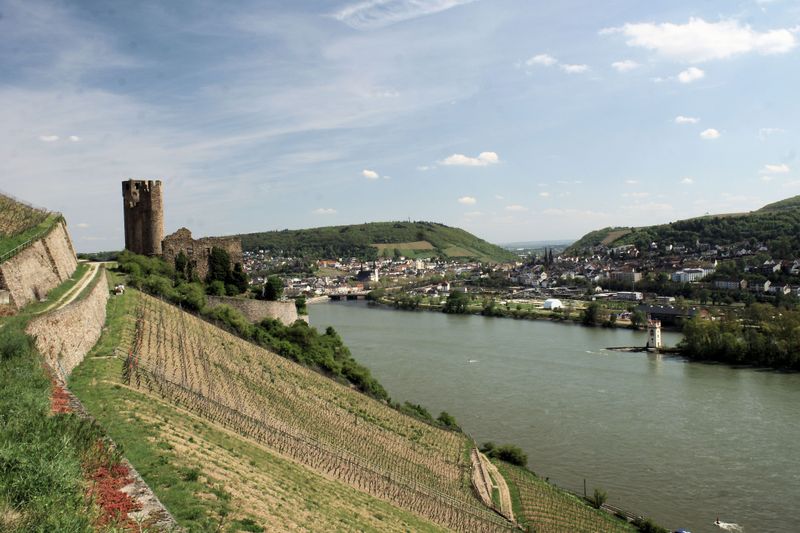
At the newly opened Heiligkreuz Forest House in June 2017, the signs show how the Hildegard Trail connects with the Camino de Santiago and the Rhine Castle Trail. From there, it is not far to the first view of the Rhine at Assmannshausen. Hiking along the Rhine Castle Trail with a view of the Upper Middle Rhine Valley (a UNESCO World Heritage Cultural Landscape since 2002) is also a great pleasure for all Hildegard fans. At Prinzenkopf, the view opens up to the Rhine Valley with Bingen to the right (west) and Rüdesheim to the left (east) and the Binger "Mouse Tower" in the foreground. From there, the path to Bingen-Bingerbrück is not far away.

On the way to Bingen or in the evening upon arrival in Bingen, we recommend reading the text of the day about Hildegard's life in Bingen (approx. 1150 - 1179).

Hiking shoes recommended!

Our tips for a carefree hiking experience:

Hiking is the perfect sport. With the right clothing and the right shoes, it is twice as much fun. Functional clothing, trekking poles, and breathable backpacks are pleasant while hiking. However, good shoes are essential. Sturdy jogging or leisure shoes are only suitable for short distances on flat paths. For longer routes, we recommend stable hiking shoes with a grippy, non-slip sole. Also, think about sun protection and bring a drink. One liter of water is ideal.

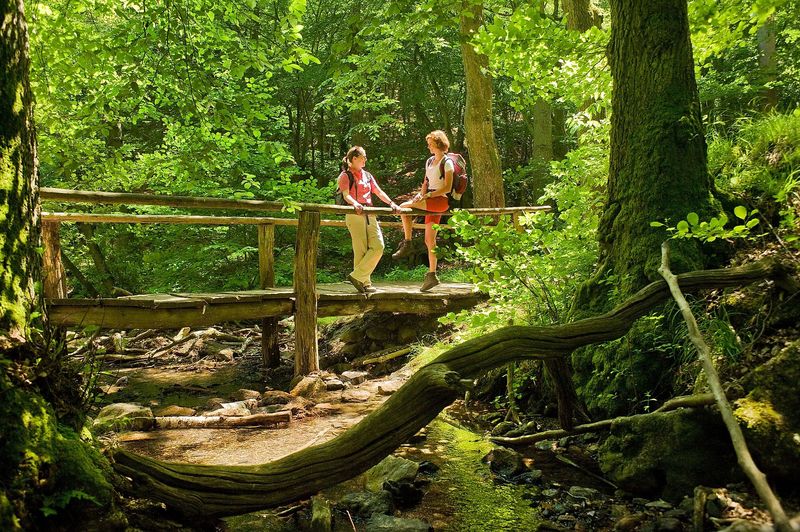
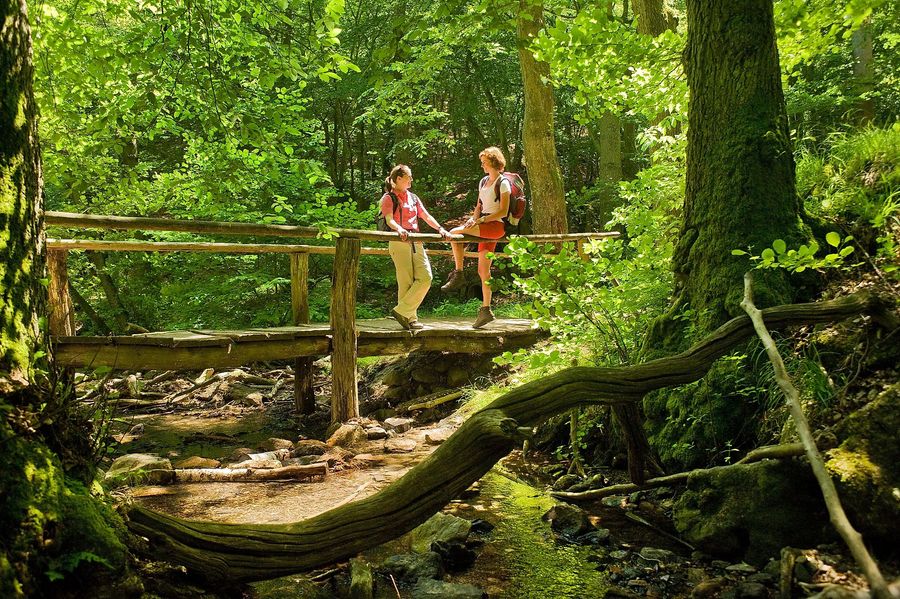
Be sure to plan some time for the "Steckeschlääferklamm" with its 66 carved tree faces. The gorge was named after a hiking group from Weiler, the Steckeschlääfers or "Stockschleifers", who developed the side valley of the Morgenbach in 1974 with wooden walkways.

More information & GPX download

In the tour planner you will find all further information, e.g. on route changes, closures or diversions, as well as the GPX file for download.

To the tour planner (www) Download GPX


You might also be interested in

All Pilgrimage Stages

From Idar-Oberstein to Bingen