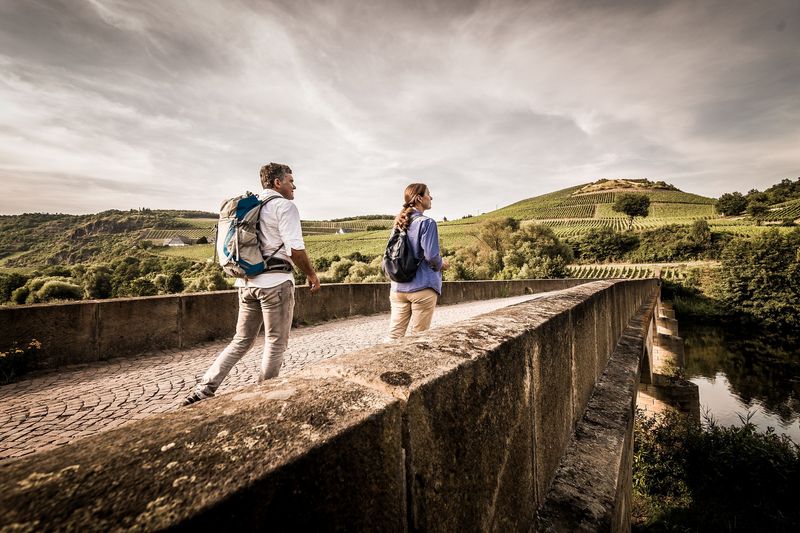
The Stage 1b runs parallel to Stage 1, but starts in Fischbach and is therefore only about half as long as the entire Stage 1, which leads from Idar-Oberstein to Herrstein.
To start the pilgrimage route, it is about 2.5 km from Fischbach/Weierbach train station. There are regular connections with the regional train from Idar-Oberstein/Saarbrücken or from Bad Kreuznach/Mainz/Frankfurt.
Hildegard von Bingen Pilgrimage Trail
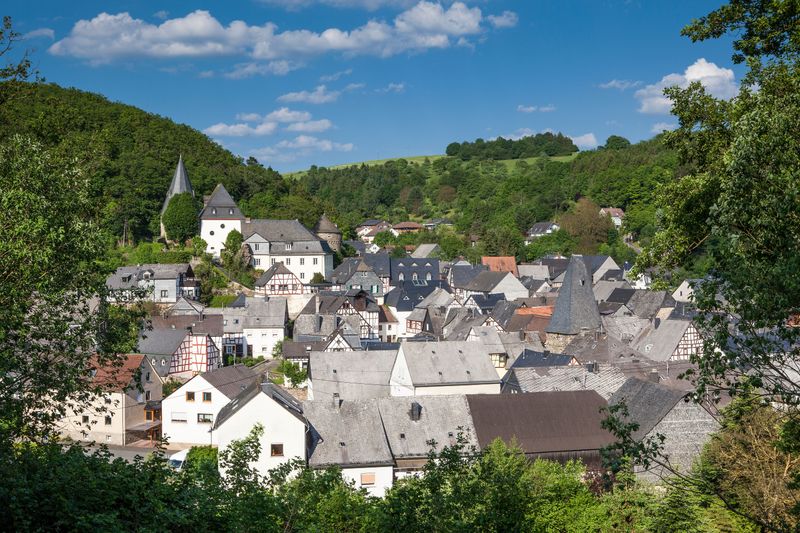
In her fourth book of Physica, she describes the effects of 26 (precious) stones. The Hildegard Trail follows the Saar-Hunsrück Trail on this stage to the medieval Herrstein.
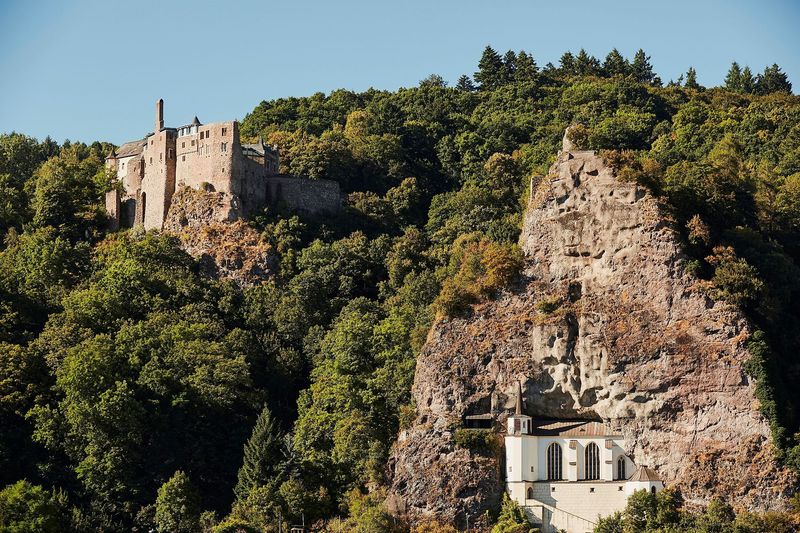
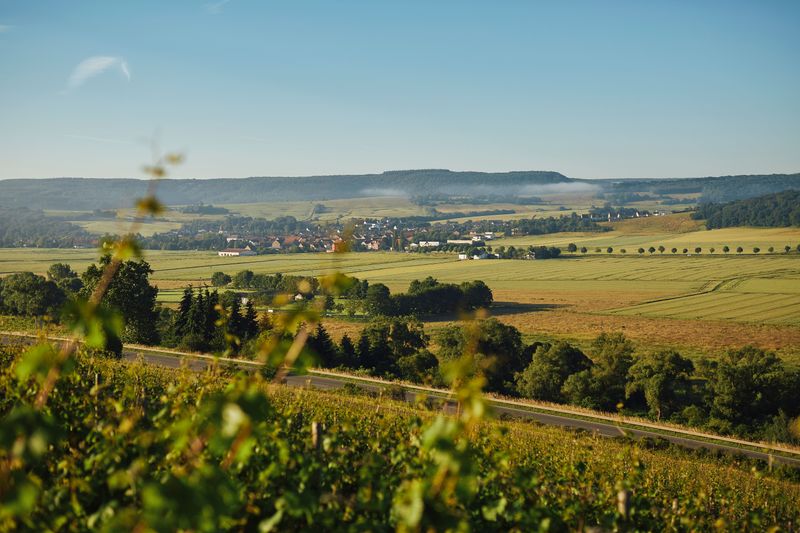
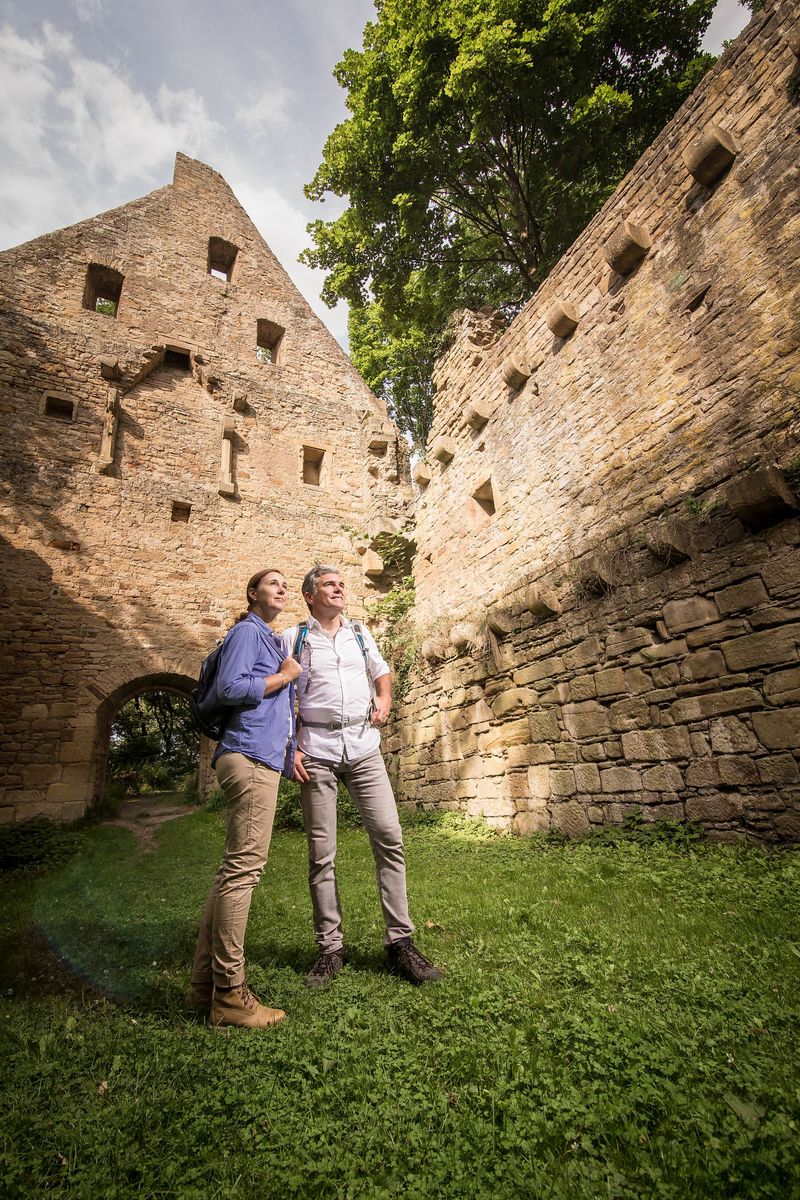
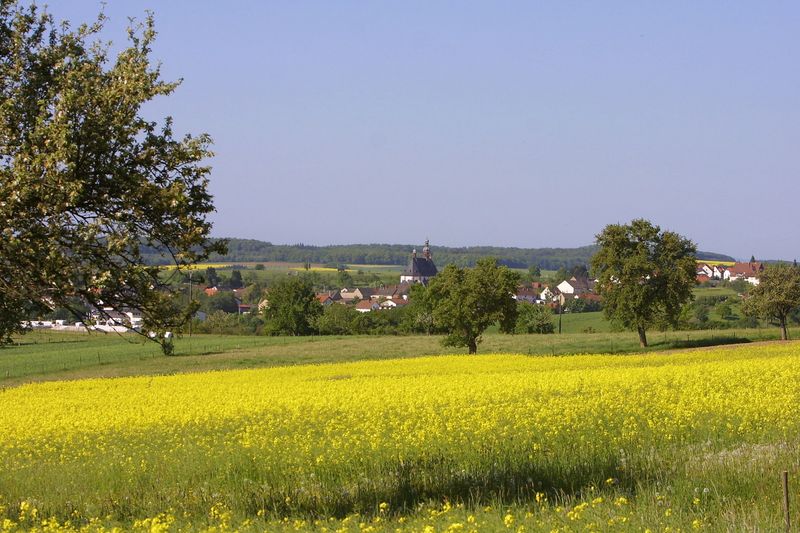
After the legendary rock church and the spectacular rock formations at the beginning, the nature-friendly path offers beautiful quiet stream valleys, ancient forests, and magnificent views when crossing the ridges.
Hildegard von Bingen, abbess, poet, theologian, naturalist, and healer, lived her entire life in today's Nahe vacation region.
Short biography of St. Hildegard von Bingen
1098: Birth of Hildegard von Bingen, probably in Niederhosenbach near Herrstein
1112: Entry into the Disibodenberg monastery near Bad Sobernheim, together with Jutta von Sponheim
1136: Hildegard von Bingen becomes the second magistra at the Disibodenberg monastery after the death of Jutta von Sponheim
around 1150: Foundation of her own women's monastery in Bingen on the Rhine
from 1150: Hildegard writes her visionary medical and musical works. She travels along the Rhine, Moselle, Main, and Neckar and preaches in public places.
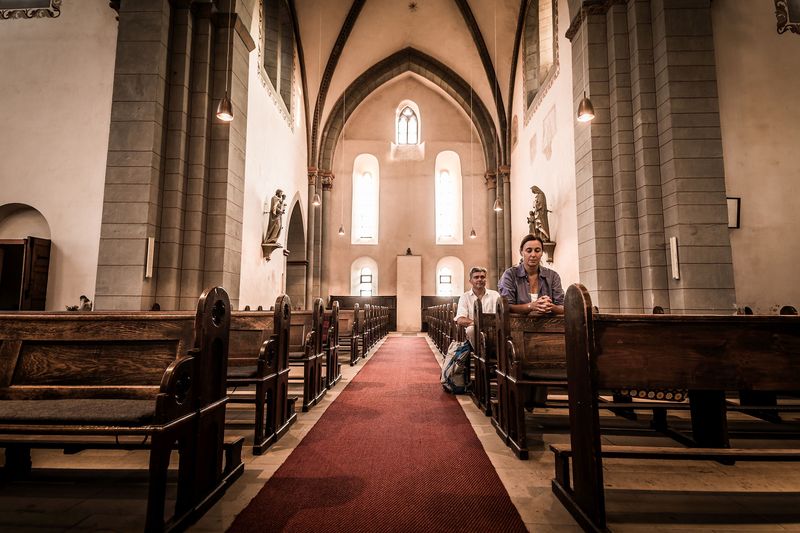
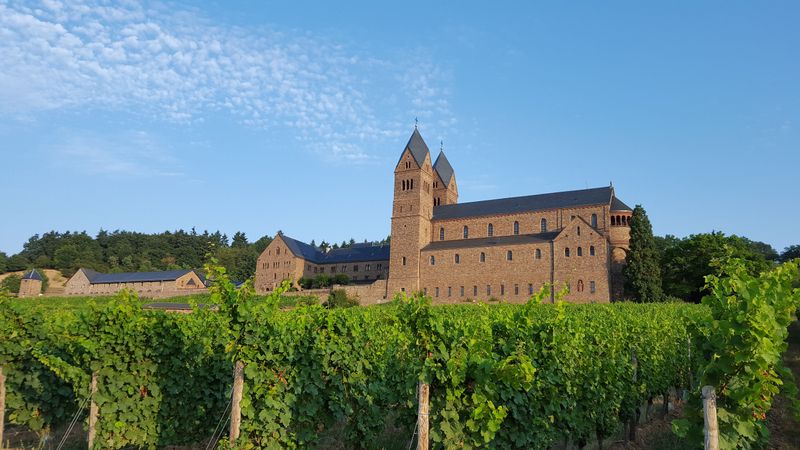
1165: Foundation of a second women's monastery in Eibingen, the present pilgrimage church St. Hildegard Rüdesheim-Eibingen
September 17, 1179: Hildegard von Bingen dies in Bingen on the Rhine
May 10, 2012: Canonization of Hildegard von Bingen by Pope Benedict XVI
October 7, 2012: Elevation to Doctor of the Church