5th Stage Hildegard of Bingen Pilgrimage Trail: Disibodenberg - Schloßböckelheim

Disibodenberg - Odernheim - Duchroth - Oberhausen an der Nahe - Schloßböckelheim The Disibodenberg...

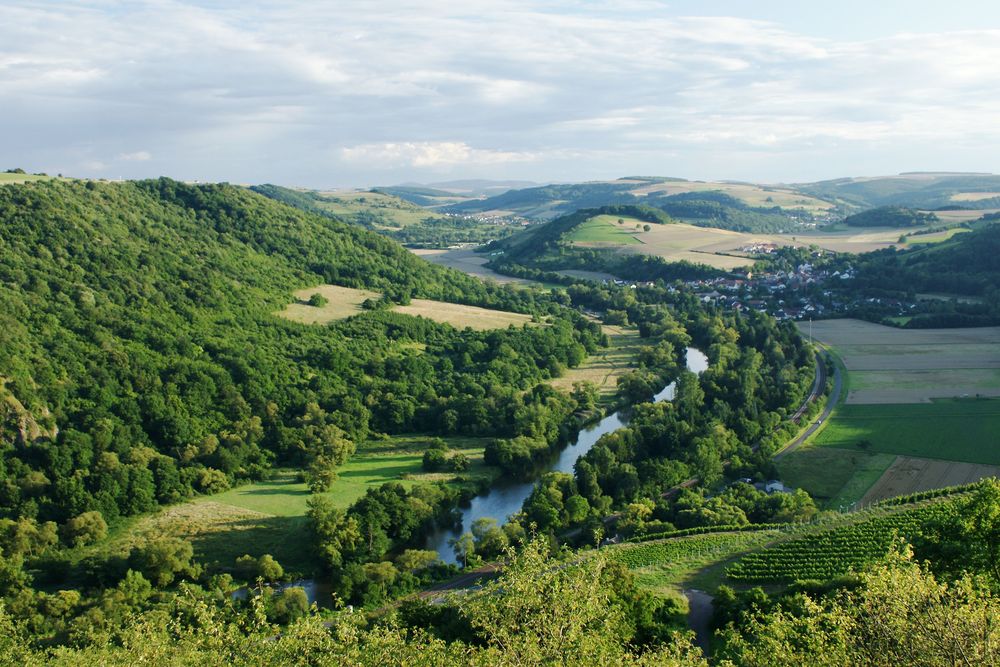
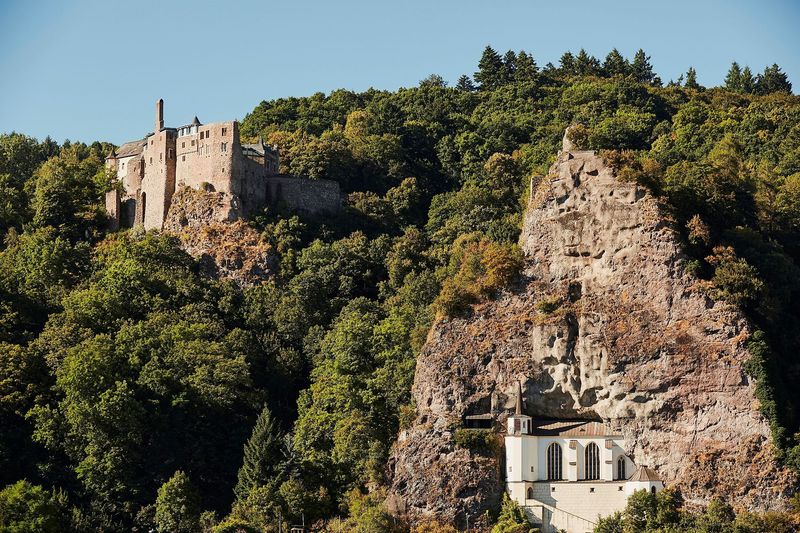
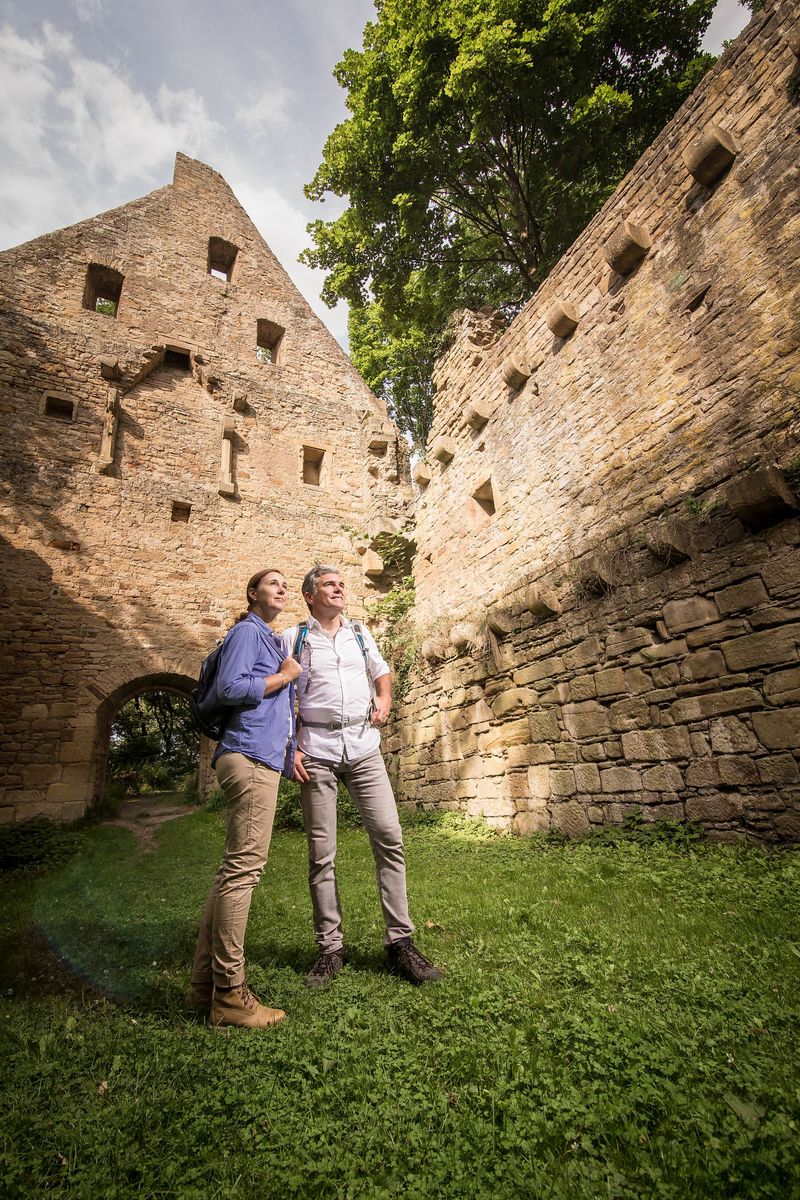
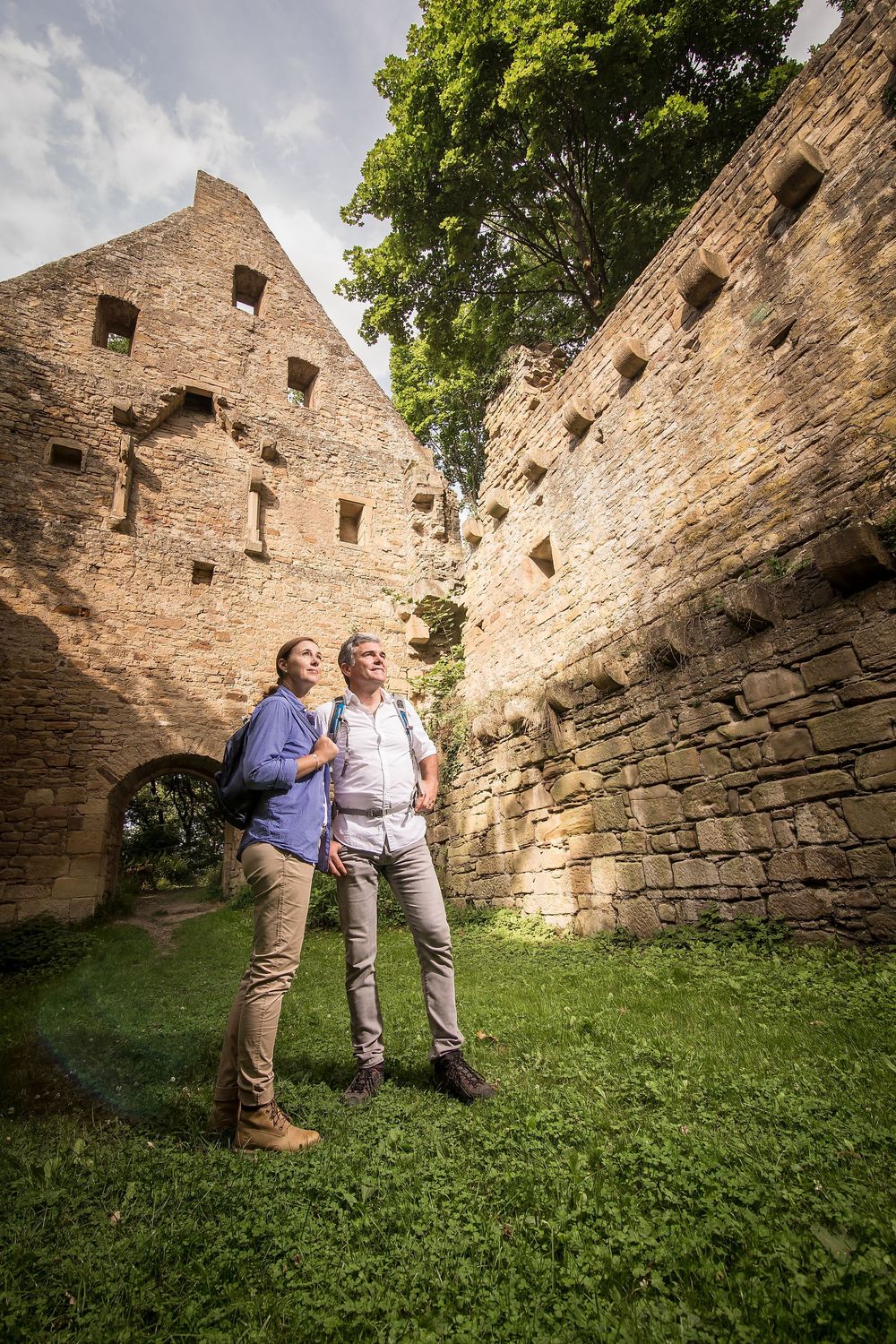
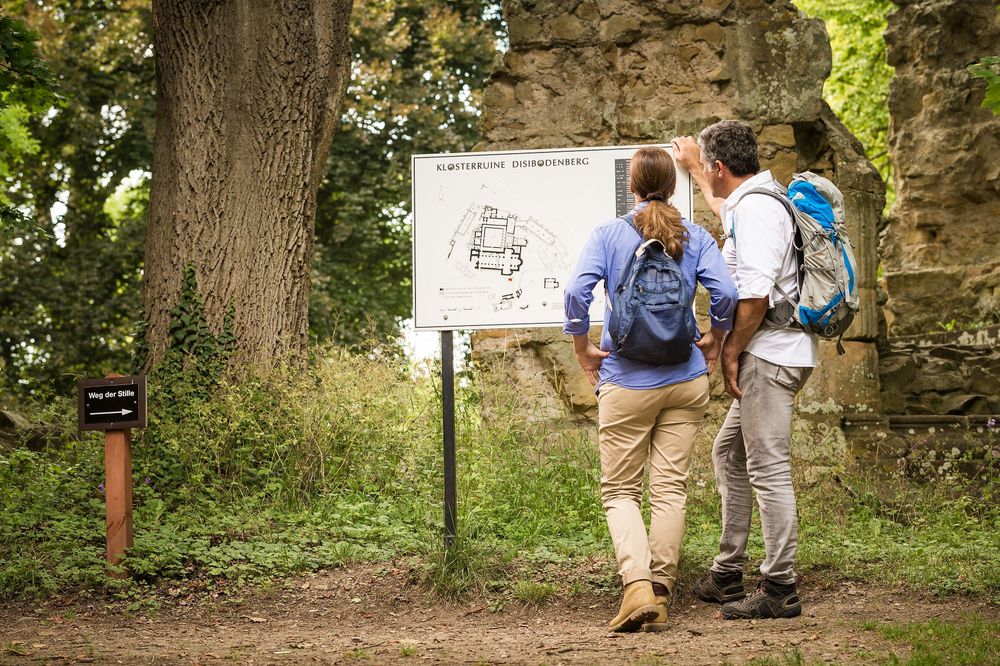
The exploration of the museum at the foot of the mountain and the monastery ruins with the prominently visible white Hildegard Chapel takes time and invites inner reflection. Information panels in the ruins explain the location and function of the buildings. The time of Hildegard on the Disibodenberg is vividly described on the information panel of the same name "Disibodenberg." From here, there are magnificent views in all directions, over the Nahe and Glan valleys and towards Odernheim located on the southern side. There is an information panel on the topic of "Elements," in which Hildegard also describes the water of the Glan.

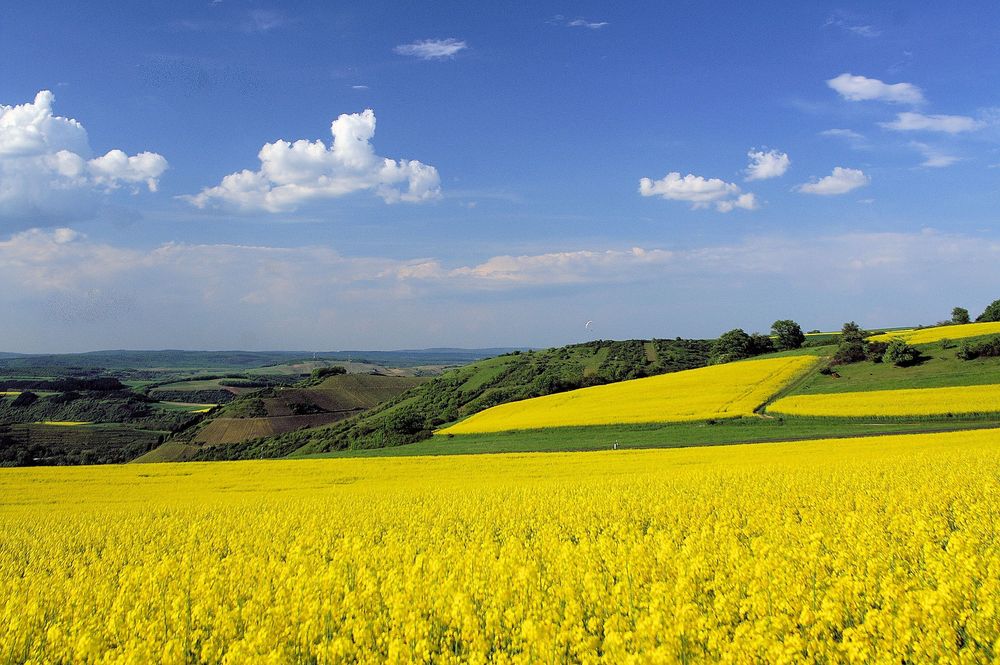
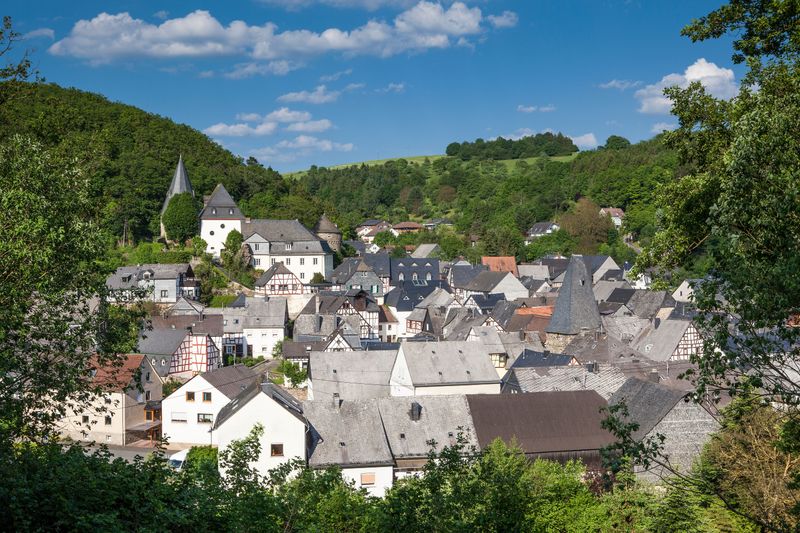
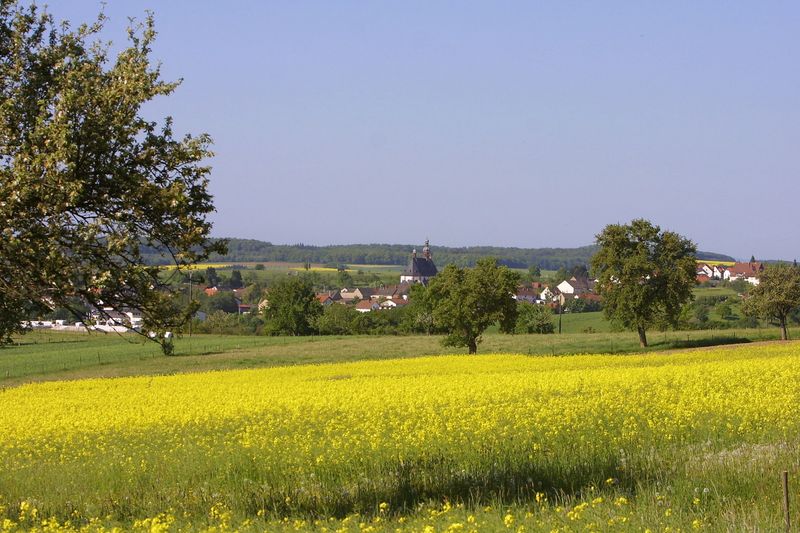
Vineyards shape the landscape around Duchroth, which has been recognized multiple times as a winner in the state competition "Our Village has a Future" and was one of the 10 villages awarded gold in the federal competition in 2016. In the center, you will find half-timbered, rubble stone, and brick buildings, as well as the town hall from the 16th century. The ring path is a renovated part of the medieval town fortifications. The many rose bushes that climb up the houses in summer are particularly striking.

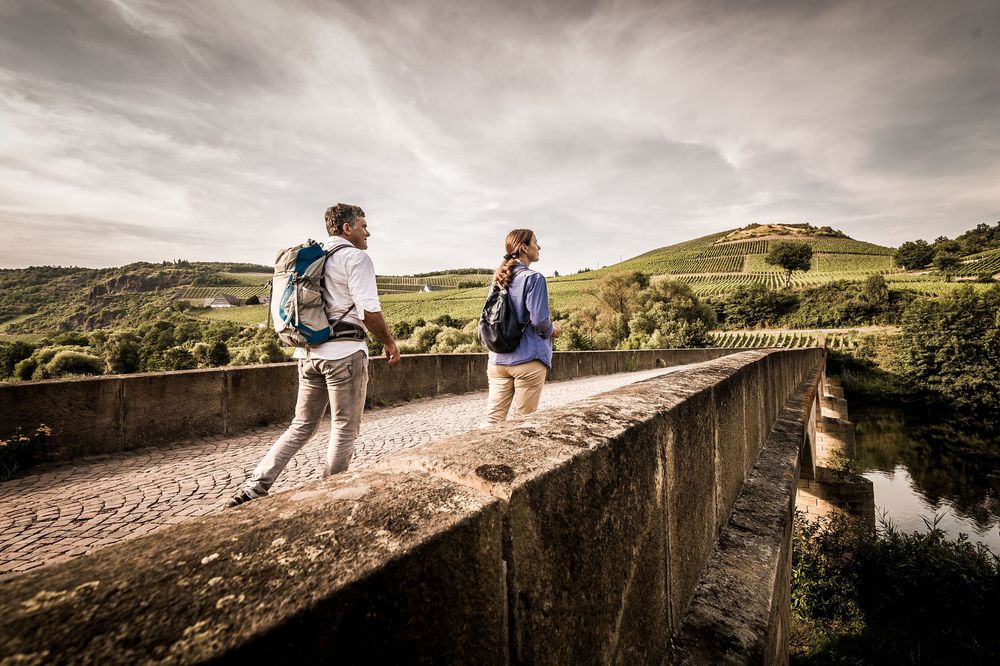
The landmark of Oberhausen on the Nahe is the Luitpold Bridge. This historic sandstone bridge was built by the Bavarian Prince Regent Luitpold in 1889 to facilitate the path for winemakers with their grapes and wines to the trading houses in Bad Kreuznach. The Luitpold Bridge separated the Kingdom of Bavaria (more precisely, the Bavarian Palatinate) from Prussia.

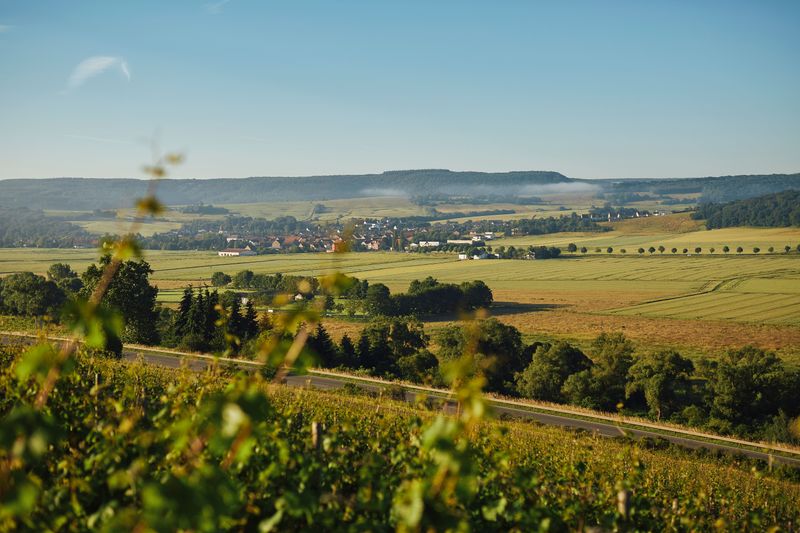
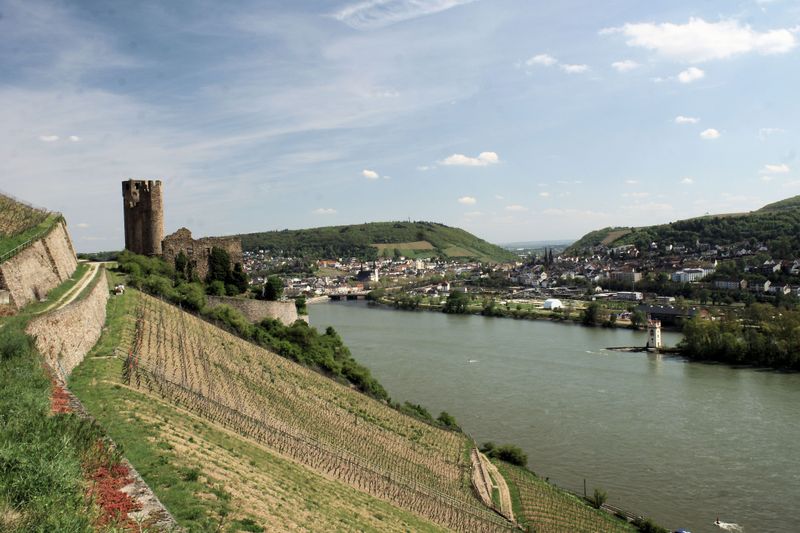
Steep slopes like the Schlossböckelheimer Kupfergrube are among the best vineyard locations in Germany.

The day's destination, Schlossböckelheim, is a place from the 12th century where world politics played out in 1106. Emperor Henry V held his own father, Emperor Henry IV, captive for several days at the castle of Böckelheim to force him to abdicate.

Note: The local community of Schlossböckelheim includes the three districts of Tal, Kolonie, and Schloss.

Hildegard von Bingen Pilgrimage Trail

Hildegard von Bingen was an abbess, poet, theologian, naturalist, and healer, and lived her entire life in today's Nahe vacation region.

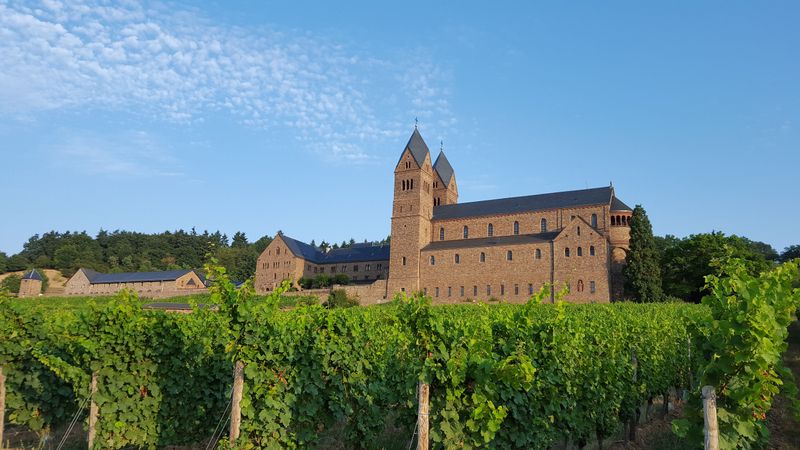
The 137-kilometer-long Hildegard von Bingen Pilgrimage Trail passes by various life stations of this probably most famous personality of the Middle Ages. The trail starts in Idar-Oberstein and continues through Niederhosenbach, the family seat and possible birthplace of Hildegard von Bingen, to Bad Sobernheim. Not far from here is the Disibodenberg Monastery Ruins, where Hildegard spent almost 40 significant years of her life. The pilgrimage trail ultimately ends in Bingen am Rhein. Here, the Rupertsberg vaulted cellar still bears witness to the last place of work of Hildegard von Bingen: in 1150, the saint founded the Rupertsberg Monastery, which was her place of creation for 29 years. The final stations of this ecumenical pilgrimage trail are the Hildegard shrine in the pilgrimage church of St. Hildegard Rüdesheim-Ebingen and the Abbey of St. Hildegard Ebingen.

59 information and meditation panels along the entire route provide information about the person of Hildegard, her work, and life in the Middle Ages. Pilgrims approach the spiritual side of Hildegard von Bingen through meditation panels that follow visionary images from her main work "Silvias - Know the Ways" and provide impulses for meditation. The panels are written in both German and English.

The Pilgrim's Pass can be stamped at Naheland-Touristik GmbH, tourist information centers, gastronomy and accommodation stations, various way stations, and finally at the Abbey of St. Hildegard in Eibingen.

Short biography of St. Hildegard von Bingen

1098: Birth of Hildegard von Bingen, probably in Niederhosenbach near Herrstein
1112: Entry into the Disibodenberg Monastery near Bad Sobernheim, together with Jutta von Sponheim
1136: Hildegard von Bingen becomes the second Magistra at the Disibodenberg Monastery after the death of Jutta von Sponheim
around 1150: Founding of a women's monastery in Bingen am Rhein
1165: Founding of a second women's monastery in Eibingen, the present pilgrimage church of St. Hildegard Rüdesheim-Ebingen
September 17, 1179: Hildegard von Bingen dies in Bingen am Rhein
May 10, 2012: Canonization of Hildegard von Bingen by Pope Benedict XVI
October 7, 2012: Elevation to Doctor of the Church
Total Distance Pilgrimage Trail

Length
approx. 10 km
Duration
approx. 4 hrs
Difficulty
2/3
Fitness
3/6
Experience
6/6
Landscape
5/6
Ascent
330 m elev.
Descent
345 m elev.
Season recommendation
Jan
Feb
Mar
Apr
May
Jun
Jul
Aug
Sep
Oct
Nov
Dec
Scenic Rest stop Stage tour From A to B geological highlights cultural / historical
5
5
5
5
5
5
5
5
5
5
5
5

Additional information

The fifth stage forms the heart of the Hildegard Trail with the Disibodenberg. Those who only have one day should start their pilgrimage hike here and begin with the labyrinth at the so-called "Women's Cloister."

But all other long-distance hikers should also take some time to visit the Disibodenberg, which lies at the confluence of the Glan and Nahe rivers. This is the place where Hildegard von Bingen lived for almost 40 years. For some visitors, Hildegard is still somehow present here today, as described by the Australian Colleen Keating.

Some perceive this old mountain of volcanic rock, which has probably been a sacred mountain since Celtic Roman times, as a magical place with special energy. The text of the meditation panel on the topic of the Trinity, which stands at the prominently visible white Hildegard Chapel, comes from the pen of Sr. Philippa Rath OSB from the Abbey of St. Hildegard. This is remarkable because this vision of Hildegard also decorates the choir wall of the pilgrimage church in Eibingen as a huge mosaic, in front of which the Hildegard shrine with her remains is located. In this way, the beginning and end of the Hildegard Trail are also brought together.

From the Disibodenberg, the path leads down the somewhat steep "Donkey Path" on the southern side to the Glan towards Odernheim. There is a panel on the topic of "Elements," in which Hildegard also describes the water of the Glan.

Historically, we are here in the Bavarian Palatinate, ecclesiastically in the Diocese of Speyer. In the center of Odernheim, there is a sculpture of Hildegard at a fountain. At the Protestant church, there is another meditation panel (Panel 29: "Baptism").

The path continues to the hill overlooking Odernheim and the Disibodenberg, where the prominently visible Hildegard Chapel stands out from afar. Here is also the second meditation corner of the Hildegard Trail and a meditation panel (Panel 30: "Confirmation").

The discovery of an ancient Celtic dwelling with jewelry from the 5th century BC reminds us of the early history of the Nahe region, whose river still bears the Celtic name, as "Nahe" means "Wild River" (Panel 31).

We walk to Duchroth, which has been awarded as the most beautiful village in Germany multiple times. There, a meditation panel awaits us in the Hildegard Garden (Panel 32: "Ecclesia & Virginitas"). In the village, there is a bakery and an opportunity to have a pilgrim's vesper.

From Duchroth, we go back down to Oberhausen on the Nahe. There is an information panel on the topic of fish, which clearly shows that Hildegard dealt intensively with the fish life in the rivers of her surroundings (Panel 33).

On the way from the Nahe up to Schloss Böckelheim, it is advisable to stop at Gut Hermannsberg for a wine tasting or at Niederthäler Hof for a vesper.

We now go to Schlossböckelheim, a place where world politics played out in the 12th century. In 1106, during Hildegard's childhood, Emperor Henry V held his own father, Emperor Henry IV, captive for several days at the castle of Böckelheim to force him to abdicate. The legend that Hildegard was born here and met the emperor at Christmas when she was eight years old, as first claimed by Abbot Johann von Trithemius and then poetically described by the local poet Gustav Pfarrius, is however a legend (Panel 34). Even though the former castle has been a ruin since the end of the 17th century, one can still enjoy a wonderful view of the land from its highest point and imagine how a castle lord or lady must have felt back then. Two meditation panels that demonstrate Hildegard's dramatic view of salvation history (Panel 35: "Christ and His Church"; Panel 36: "The Adversary") make us pause.

Hiking shoes recommended!

Our tips for a carefree hiking experience:

Hiking is the perfect sport. With the right clothing and shoes, it is twice as enjoyable. Functional clothing, trekking poles, and breathable backpacks are comfortable while hiking. However, good shoes are essential. Sturdy jogging or leisure shoes are only suitable for short distances on flat paths. For longer trails, we recommend stable hiking shoes with a grippy, non-slip sole. Also, think about sun protection and bring a drink. One liter of water is ideal.

Tractor Museum in Oberhausen: Approximately 30 tractors from the period of 1916 to 1960 are on display; the star of the museum is a Lanz steam traction engine from 1908. The museum is expanded and maintained with much time and love by Manfred Nessel.

More information & GPX download

In the tour planner you will find all further information, e.g. on route changes, closures or diversions, as well as the GPX file for download.

To the tour planner (www) Download GPX


You might also be interested in

All Pilgrimage Stages

From Idar-Oberstein to Bingen