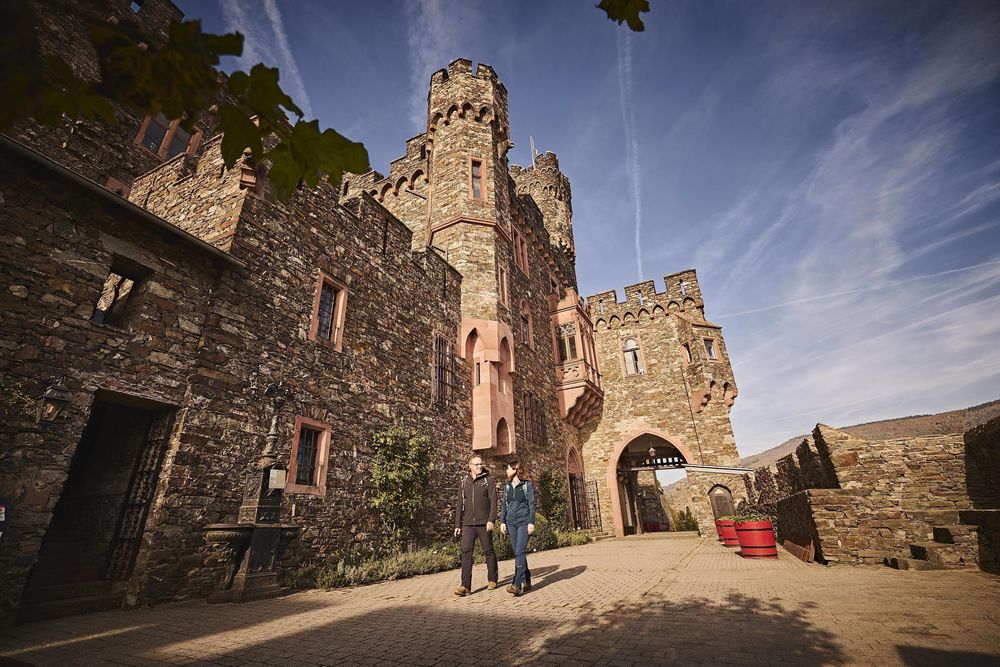
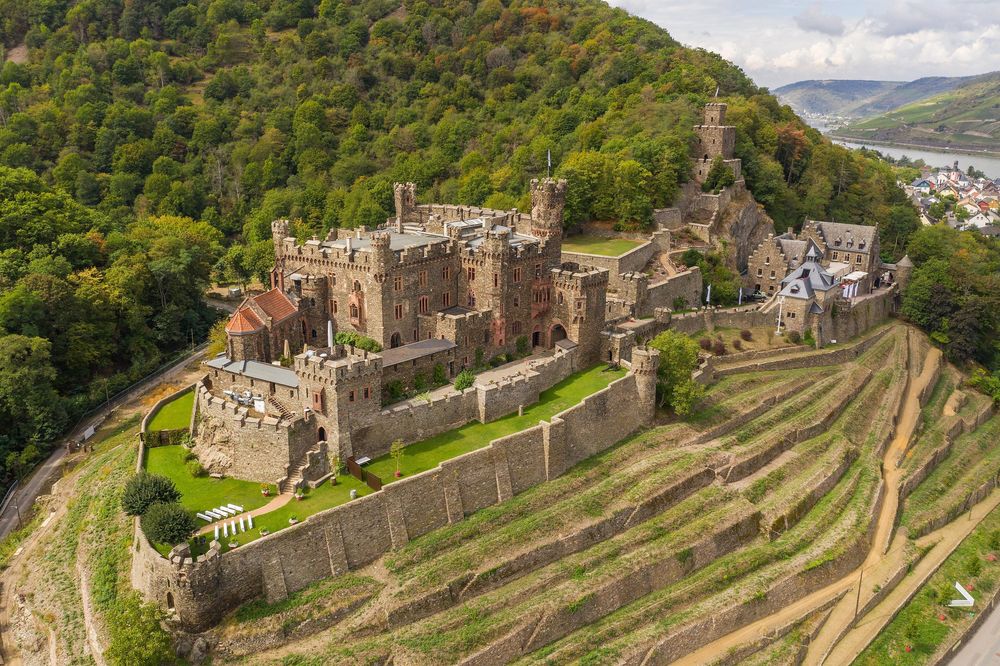
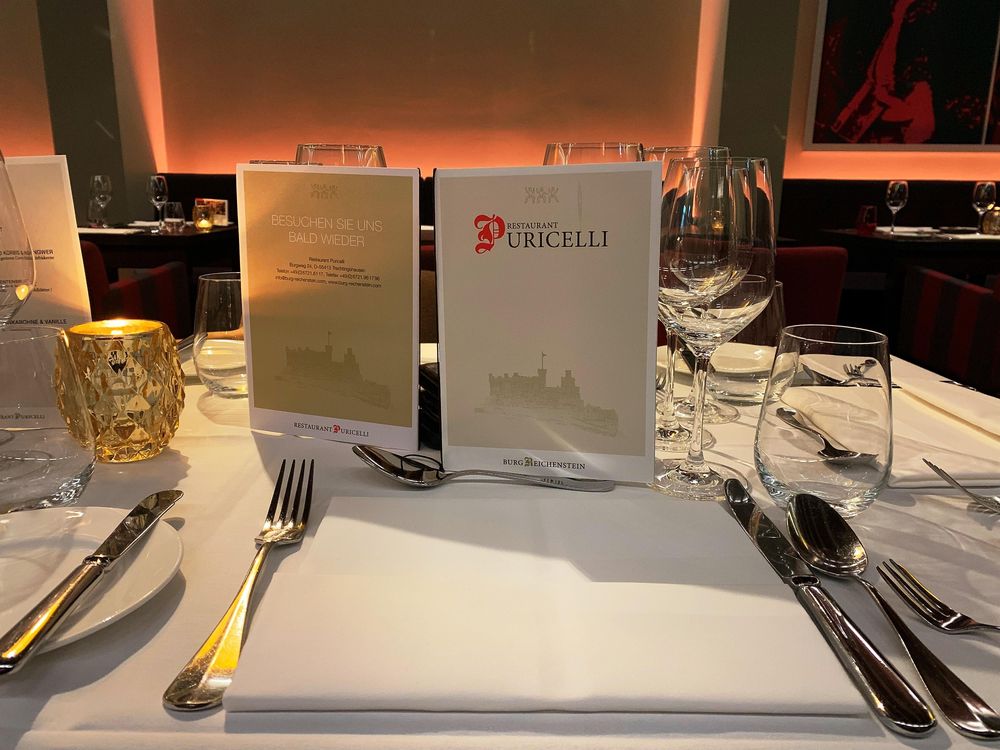
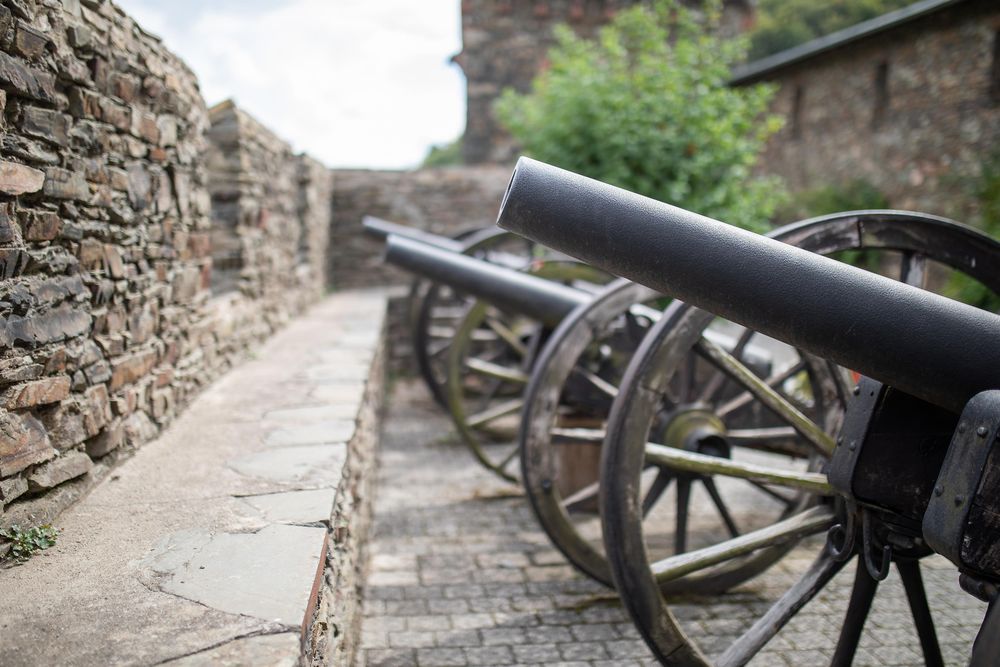
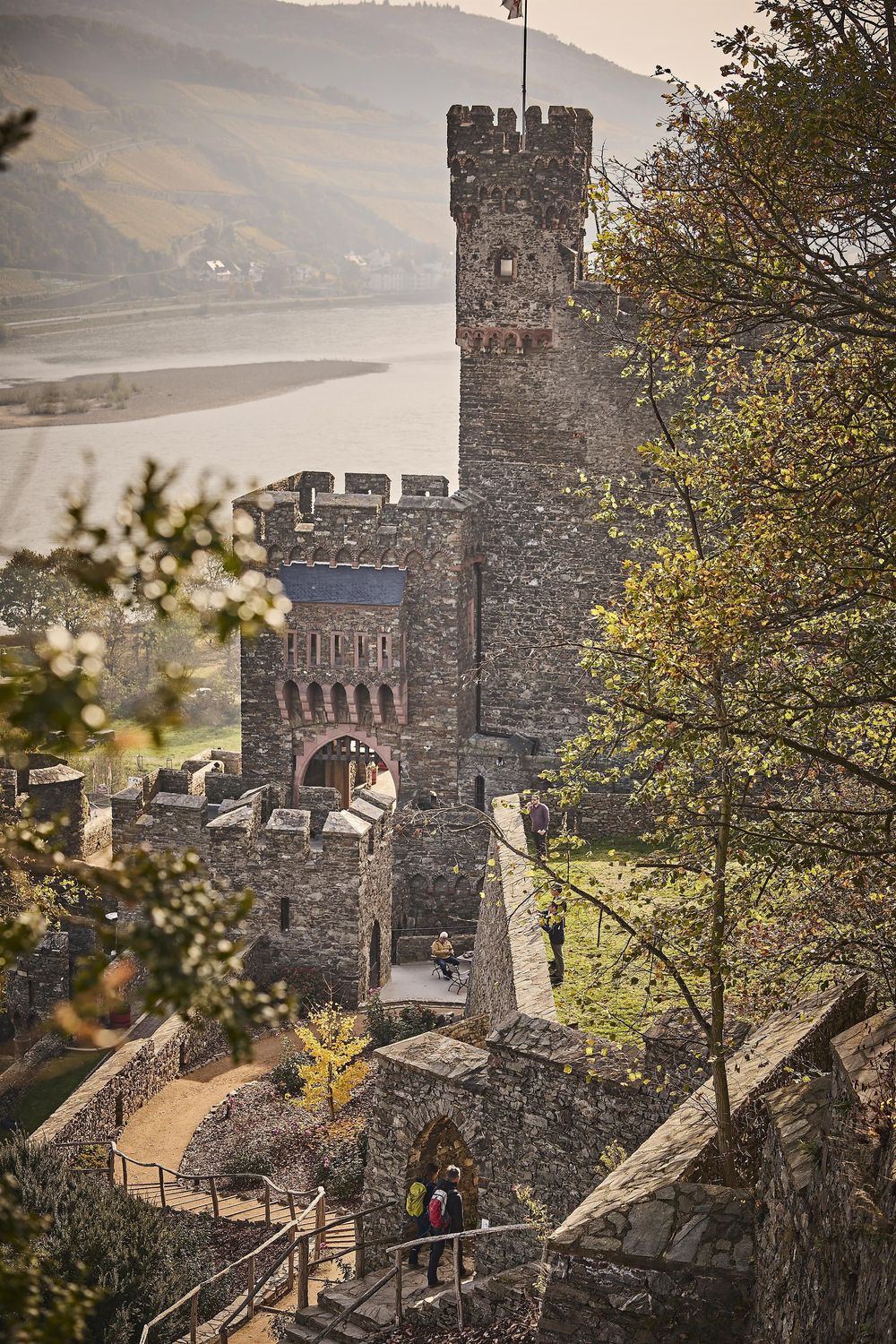
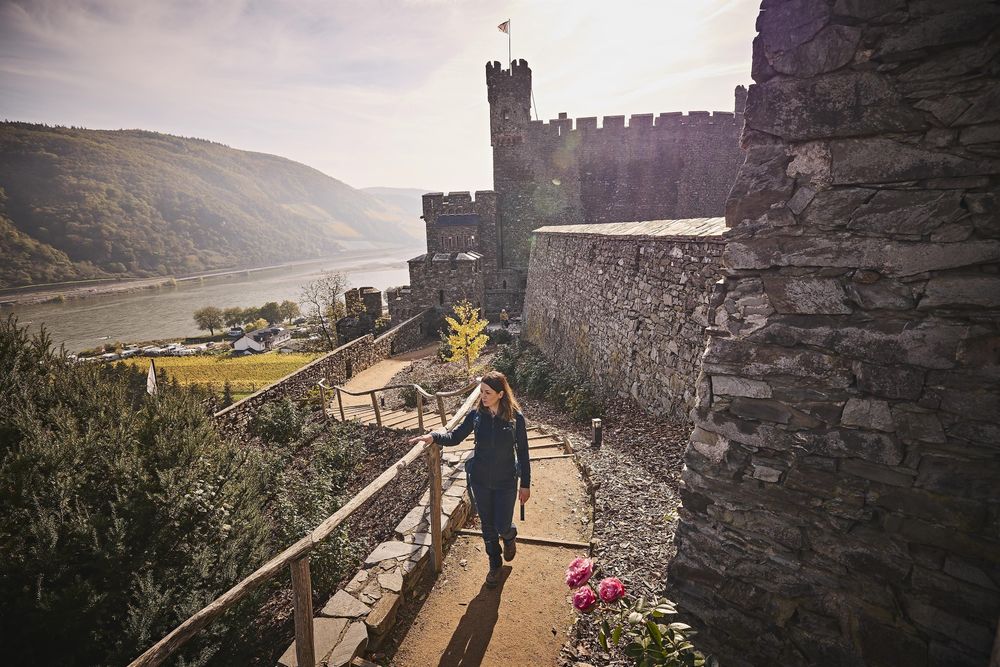
The most recent reconstruction of a medieval castle on the Rhine is located in Trechtingshausen: Burg Reichenstein underwent a comprehensive and heavily transformative reconstruction from 1899 to 1903. Its original builder is unknown, and the predecessor building dates back to the first half of the 13th century. Like Burg Sooneck, Reichenstein was a notorious den of robbers. Unauthorized raids and claims of ownership over territories, feuds, and other injustices were not uncommon. In response, there were sieges, destructions, and in 1290, even a reconstruction ban imposed by King Rudolf of Habsburg on the castles Reichenstein and Sooneck. Previously, after the siege and destruction of both castles, he had ordered the execution of the robbers. Today, alongside the fully furnished castle rooms of Burg Reichenstein, there is also a castle restaurant and a hotel.
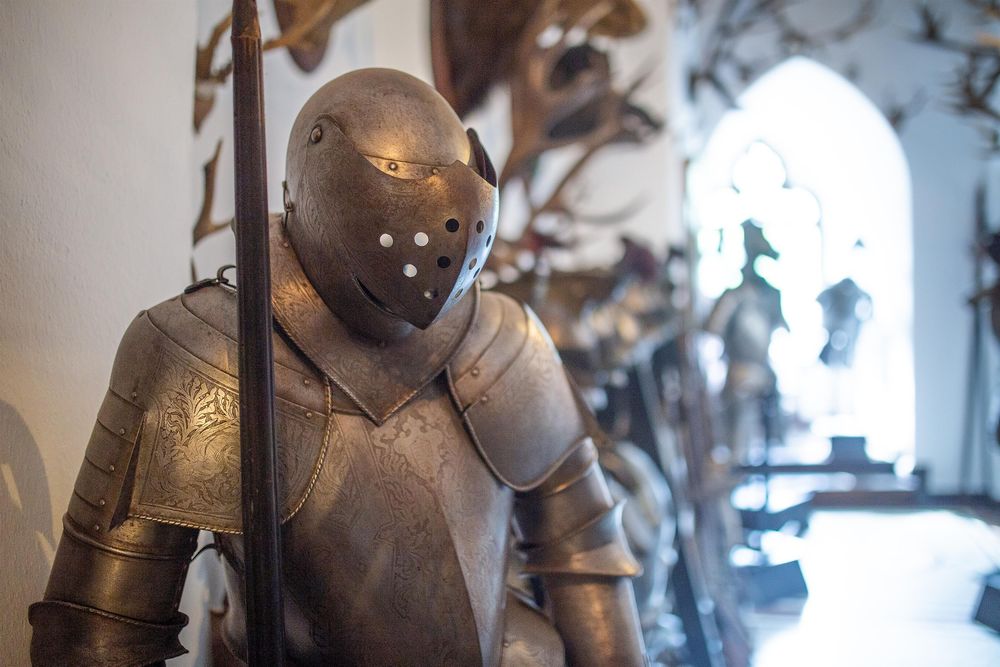
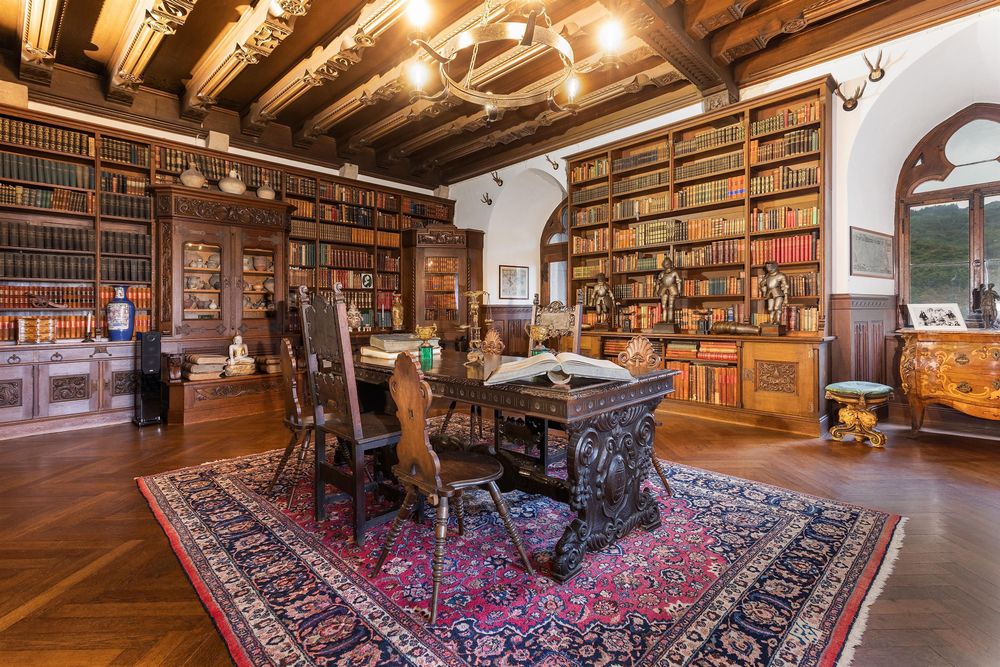
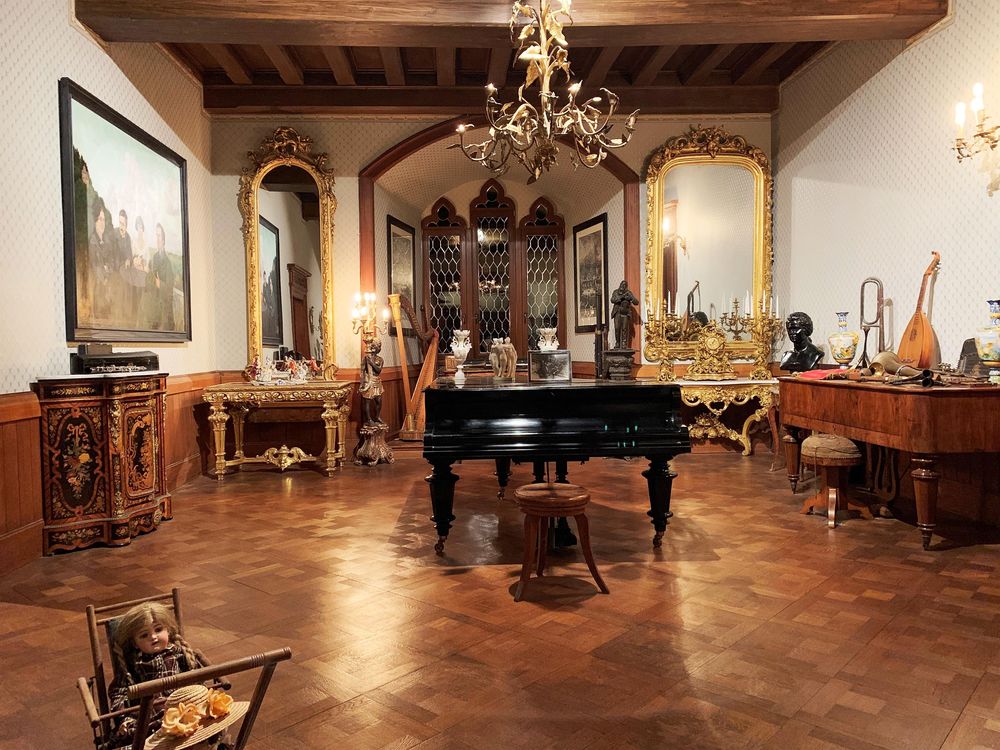
In the museum of Burg Reichenstein, three exhibition focuses impress: the living culture of the wealthy industrial family, the stoves and tiles from the Rheinböller ironworks, and the trophy collection of Mr. Kirsch-Puricelli. The rooms are equipped with a largely preserved historicist interior and paintings of the castle lady. They provide an exceptionally good insight into the late romantic living culture at the end of the 19th and beginning of the 20th centuries. On display are the dining room with an ancestral gallery, the library, the card room, the music salon, and a bedroom. In the oldest part of the castle, there are the 'Stove Hall' and the 'Iron Chamber.' Here, excerpts from the product range of the Rheinböller ironworks are presented, such as stoves, cast iron stove and tile plates, and money chests. The collection of stove and tile plates is one of the largest in Germany. Tile plates were embedded in a recess of the fire wall between the kitchen and the living room and directed the heat from the open fire in the kitchen to the living room. The castle lord Kirsch-Puricelli was a passionate hunter and collected 1,200 trophies from four continents. The exhibition of hunting trophies and tile plates is very well showcased in the impressive staircase of the rebuilt castle.