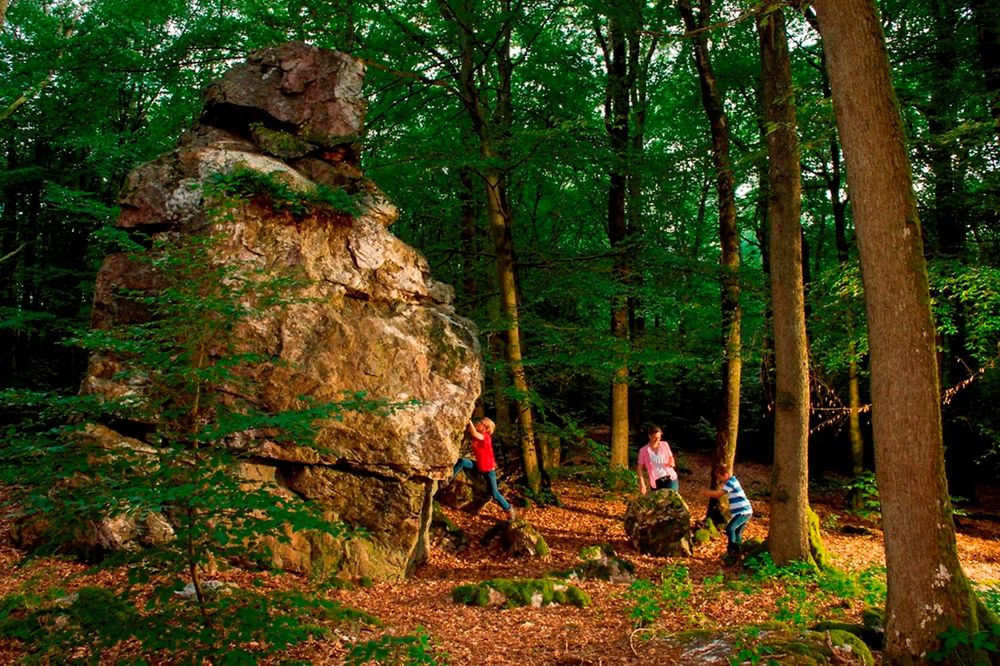
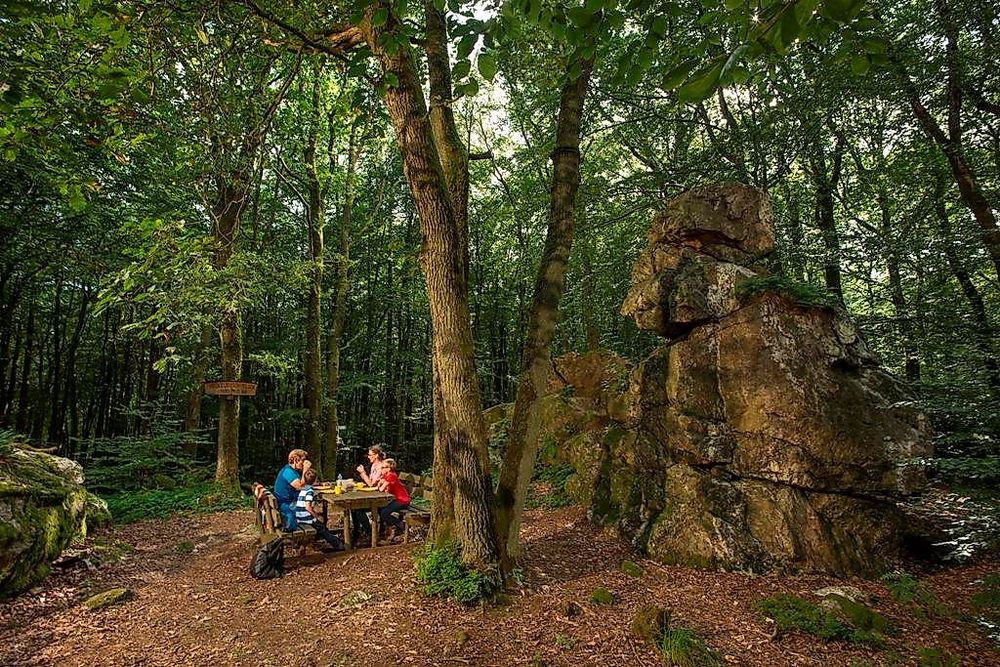
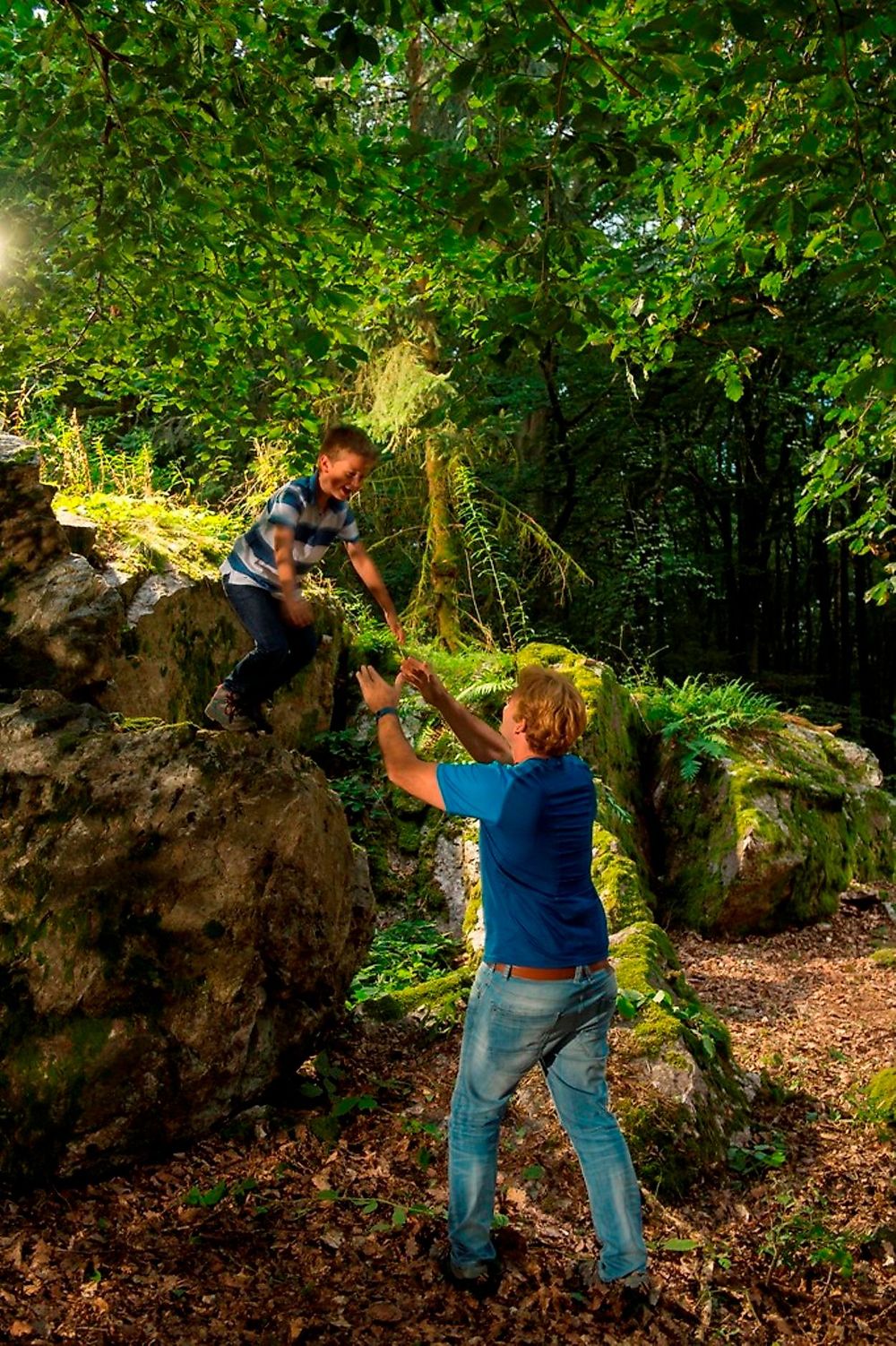
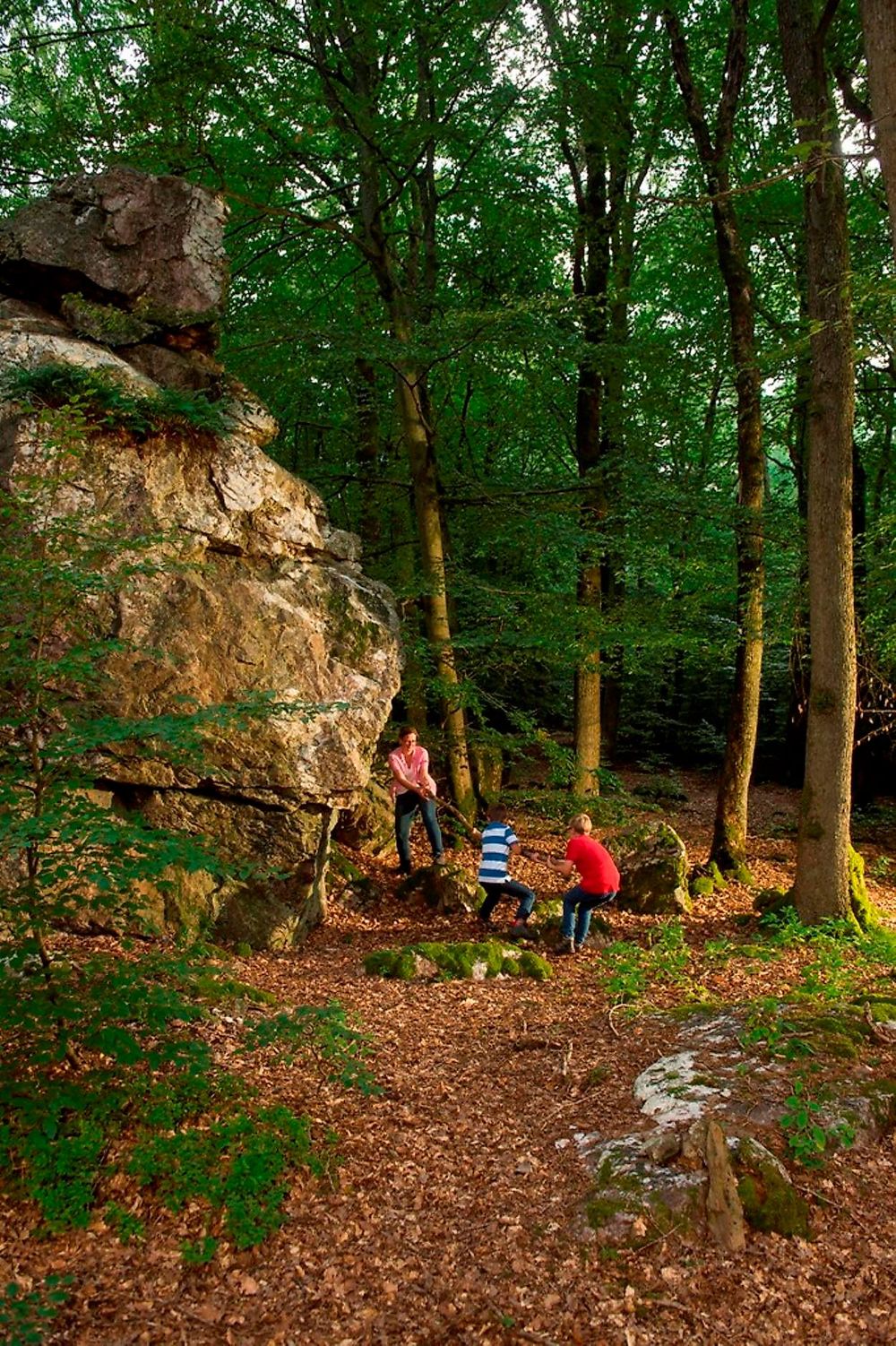
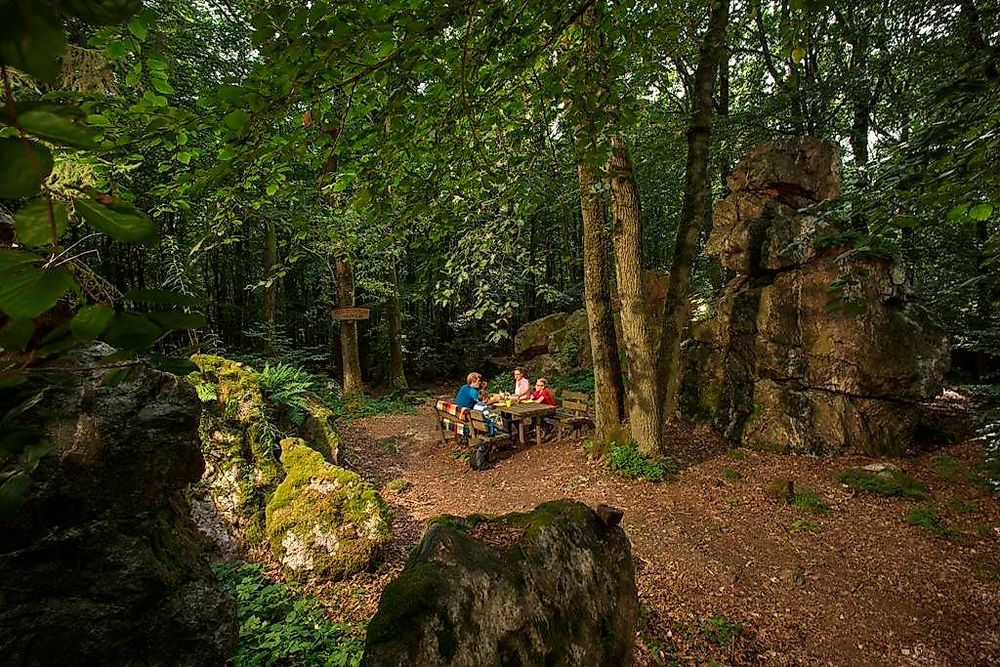
When hikers are on the dream loop "Ruwer-Hochwald", they climb a massive rock formation southeast of Hentern, the so-called Heckelbüschfelsen, which exerts a magical attraction, especially on children, because it is a single large adventure playground. While the children can indulge their climbing desires on the various rock blocks, adults can find a cozy resting place among the rocks, inviting them to take a break during the rather challenging hike. The Heckelbüsch is part of a powerful quartz vein that was exposed during the Ice Age due to the very strong weathering and erosion at that time, revealing a hard rock rib from the surrounding softer rock. The apparently white coloring gives the rock the name milk quartz. Due to the temperature changes, the barely vegetated ground during this geological period was subjected to a permanent cycle of freezing and thawing, which led to a sliding movement on slopes and made it possible to transport even larger rock blocks into the surroundings. Thus, it can be explained that one often finds blocks far away from the original rock formation that have no connection to the substrate on which they lie, but were transported there due to the flow movement of the ground at that time. The milk quartzite consists of SiO2 - silicon dioxide; it was used in the Middle Ages for glass production. Today, quartz is needed for the production of solar cells.