1st Stage Hildegard von Bingen Pilgrimage Trail: Idar-Oberstein - Herrstein

The 1st stage of the Hildegard von Bingen Pilgrimage Trail is very challenging and characterized by a...

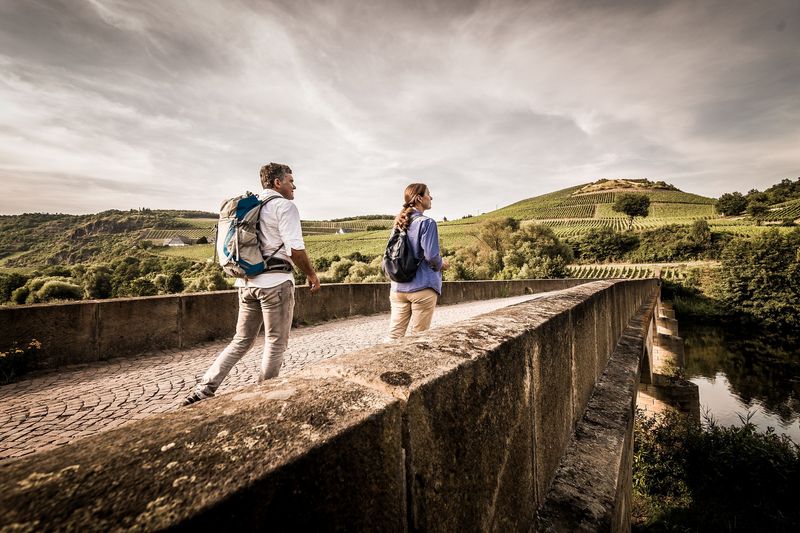
The 1st stage of the Hildegard von Bingen Pilgrimage Trail is very demanding. The path leads for about 19 kilometers along narrow trails, past rocks, through forests, and includes a section that steeply descends on stairs.

We therefore recommend splitting the first stage and staying overnight halfway in Fischbach.

Please read the descriptions of the stages 01a and 01b.

Idar-Oberstein is internationally known as the gemstone city. Various museums invite visitors to engage with the gemstones that have been mined and processed here for centuries. Accordingly, the first information panel on the Hildegard Trail deals with Hildegard's mineralogy (Panel 2: Stones, German Mineral Museum). However, the seer and natural healer abbess did not write about stones themselves, but about the healing effects of stones on humans.

Hildegard von Bingen Pilgrimage Trail
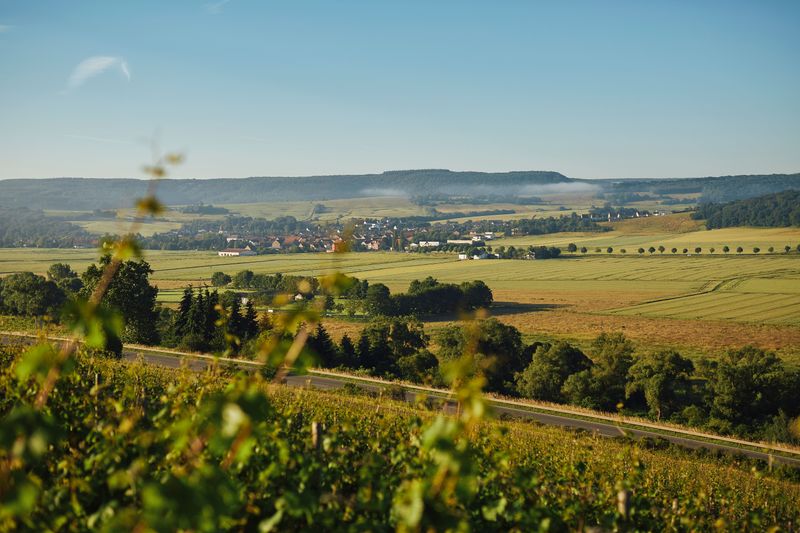
In her fourth book of Physica, she describes the effects of 26 (precious) stones. After the legendary rock church and the spectacular rock formations at the beginning, the nature-oriented path offers beautiful quiet stream valleys, ancient forests, and magnificent views when crossing the ridges.

Hildegard von Bingen, abbess, poet, theologian, naturalist, and healer, lived her entire life in today's Nahe vacation region.

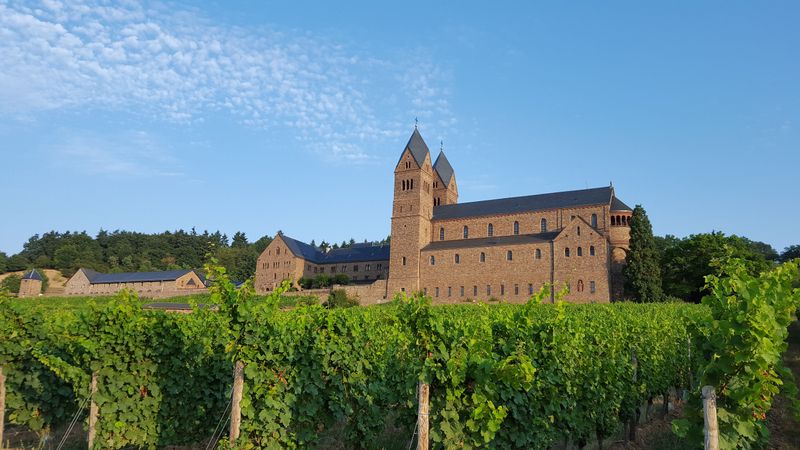
The 137-kilometer-long Hildegard von Bingen Pilgrimage Trail passes various life stations of one of the most famous personalities of the Middle Ages. The trail starts in Idar-Oberstein and continues through Niederhosenbach, the family seat and possible birthplace of Hildegard von Bingen, to Bad Sobernheim. Not far from here is the Disibodenberg monastery ruin, where Hildegard spent almost 40 significant years of her life. The pilgrimage trail finally ends in Bingen on the Rhine. Here, the Rupertsberg vaulted cellar still bears witness to the last place of work of Hildegard von Bingen: In 1150, the saint founded the Rupertsberg monastery, which was her place of creation for 29 years. The last stations of this ecumenical pilgrimage trail are the Hildegard shrine in the pilgrimage church of St. Hildegard Rüdesheim-Ebingen and the Abbey of St. Hildegard Ebingen.

The pilgrimage trail is divided into 10 stages. The stages range from 5 to 21 kilometers.

59 information and meditation panels along the entire route inform about the person of Hildegard, her work, and life in the Middle Ages. The spiritual side of Hildegard von Bingen is approached by hikers through meditation panels that follow Hildegard von Bingen's visionary images from her main work "Silvias - Know the Ways" and provide impulses for meditation. The panels are written in both German and English.

The pilgrim pass can be stamped in the accommodation establishments, other way stations, and finally at the Abbey of St. Hildegard in Eibingen.

Short biography of St. Hildegard von Bingen

1098: Birth of Hildegard von Bingen, probably in Niederhosenbach near Herrstein
1112: Entry into the Disibodenberg monastery near Bad Sobernheim, together with Jutta von Sponheim
1136: Hildegard von Bingen becomes the second magistra in the Disibodenberg monastery after the death of Jutta von Sponheim
around 1150: Founding of her own women's monastery in Bingen on the Rhine
from 1150: Hildegard writes her visionary medical and musical works. She travels along the Rhine, Moselle, Main, and Neckar and preaches in public squares.
1165: Founding of a second women's monastery in Eibingen, the present pilgrimage church of St. Hildegard Rüdesheim-Eibingen
September 17, 1179: Hildegard von Bingen dies in Bingen on the Rhine
May 10, 2012: Canonization of Hildegard von Bingen by Pope Benedict XVI
October 7, 2012: Elevation to Doctor of the Church

Total Distance Pilgrimage Trail

Length
approx. 10 km
Duration
approx. 6 hrs
Difficulty
3/3
Fitness
6/6
Experience
4/6
Landscape
5/6
Ascent
705 m elev.
Descent
652 m elev.
Season recommendation
Jan
Feb
Mar
Apr
May
Jun
Jul
Aug
Sep
Oct
Nov
Dec
Scenic Resting opportunity Stage tour From A to B geological highlights cultural / historical
1
1
1
1

Additional information

Already from the Idar-Oberstein train station, the Hildegard Trail is signposted towards the Obersteiner Old Town and marketplace. Here, a visit to one of the numerous cafés and restaurants or the Idar-Oberstein Mineral Museum is possible. From the Obersteiner marketplace, it goes up 216 steps to the rock church.

The rock church is the sacred landmark of Idar-Oberstein. About 60 meters high in the rock, it was built from 1482 to 1484 as atonement for a brother's murder. At the footpath to the rock church stands the 1st of about 26 meditation panels titled "The Seer". Through some serpentines and dense forest, we then reach the castle complexes of Schloss Oberstein and Burg Bosselstein high above the old town of Oberstein. From here, we follow the parallel path of the dream loop "Nahe-Rock Trail".
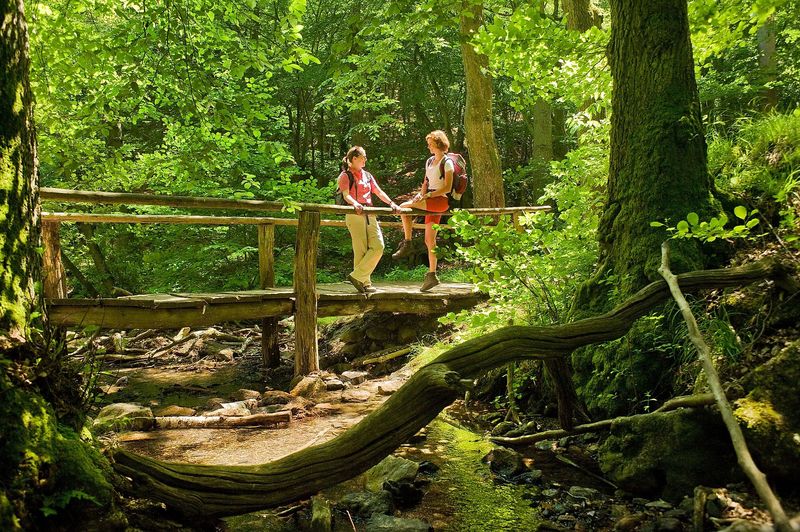
Our effort in climbing is rewarded with a fantastic view of the city center and the wooded heights of the "Prussian Mountains". At the "Schlossweiher", just a few hundred meters away, a grill hut and several benches and tables invite us to take a short or longer break. From the 5th kilometer, the path follows the concurrent Saar-Hunsrück Trail. On a nature-oriented passage with beautiful quiet stream valleys, ancient forests, and crossing ridges with magnificent views, the Hildegard von Bingen Pilgrimage Trail reaches Fischbach in the Fischbach Valley after a gentle descent.
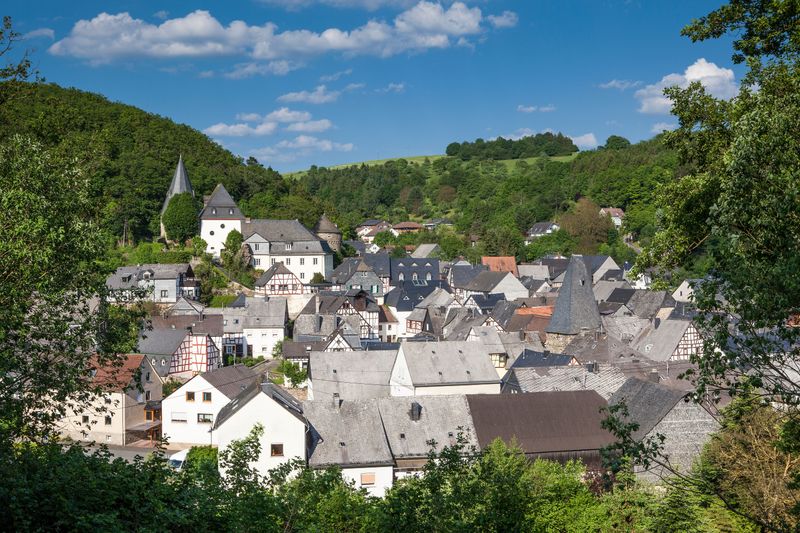
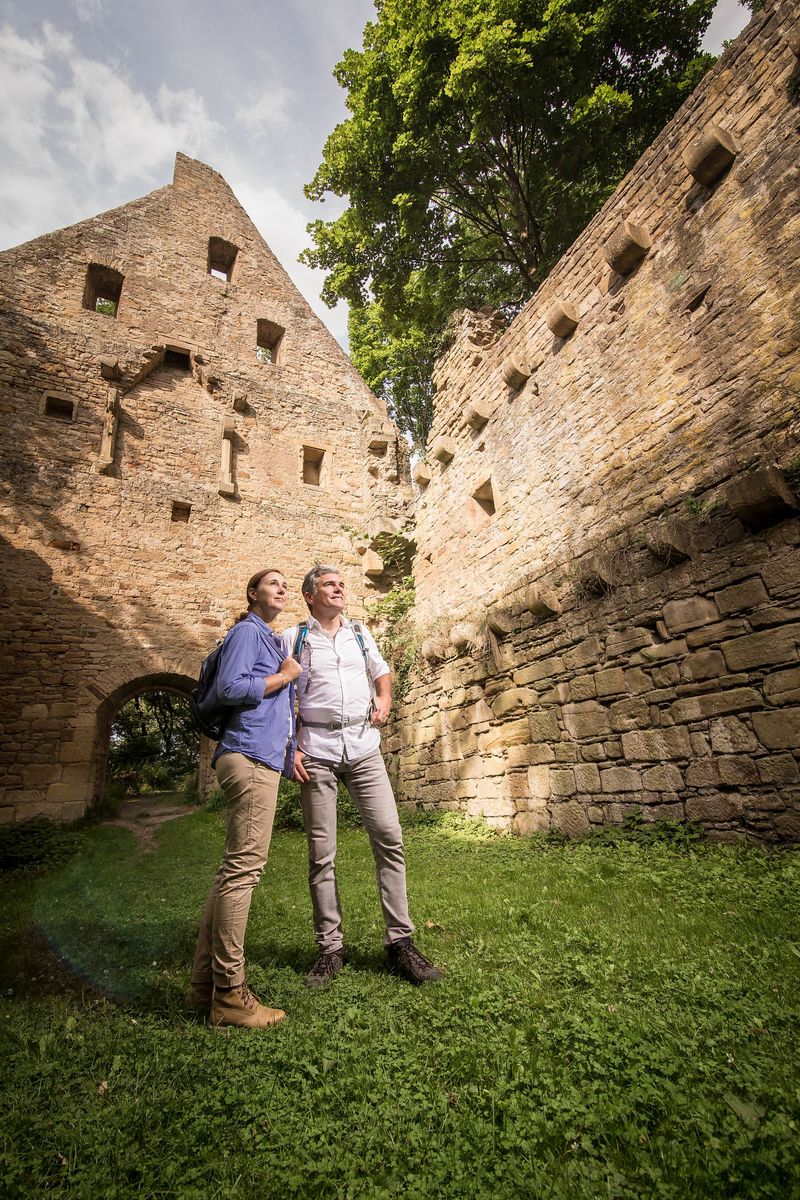
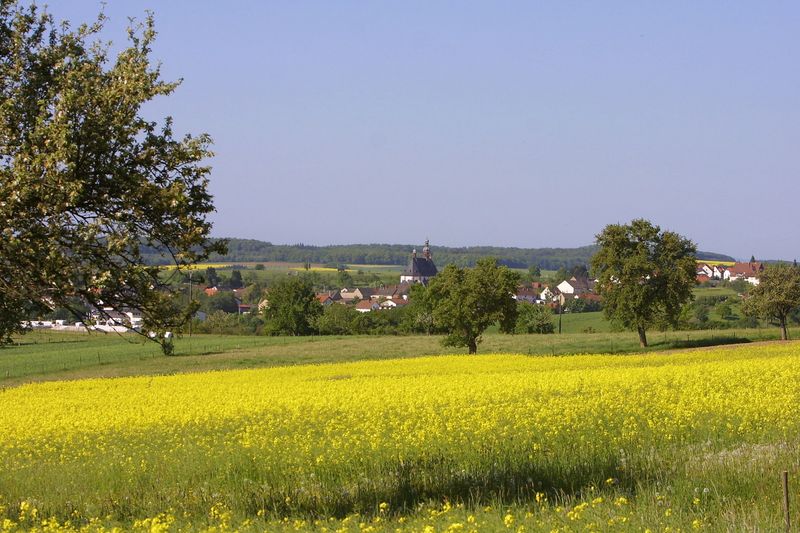
After Fischbach, a detour via the marked access path to the Historical Copper Mine is worthwhile. At the end of the stage, we reach the medieval Herrstein with its numerous half-timbered houses and romantic alleys.
This stage, given by the landscape, is the longest and steepest route with several ascents and is more suitable for experienced hikers. Those who cannot or do not want to face this sporting challenge are recommended to at least travel part of the route or to split this stage over two days (Stage 1a and 1b).

The first stage of the Hildegard von Bingen Pilgrimage Trail is very demanding and characterized by a varied path with steep descents.

The path leads for about 21 kilometers along narrow trails, past rocks, through forests, and includes a section that steeply descends on stairs. It is possible to split the first stage and stay overnight halfway in Fischbach.

Hiking shoes recommended!

Our tips for a carefree hiking experience:

Hiking is the perfect sport. With the right clothing and shoes, it is twice as enjoyable. Functional clothing, trekking poles, and breathable backpacks are comfortable while hiking. However, good shoes are essential. Sturdy jogging or leisure shoes are only suitable for short distances on flat paths. For longer trails, we recommend stable hiking shoes with a grippy, non-slip sole. Also, think about sun protection and bring a drink. One liter of water is ideal.

In Fischbach, a side path leads you to the Historical Copper Mine, the largest manually excavated expansion in Europe during the Middle Ages. A visit is worthwhile!

More information & GPX download

In the tour planner you will find all further information, e.g. on route changes, closures or diversions, as well as the GPX file for download.

To the tour planner (www) Download GPX


You might also be interested in

All Pilgrimage Stages

From Idar-Oberstein to Bingen