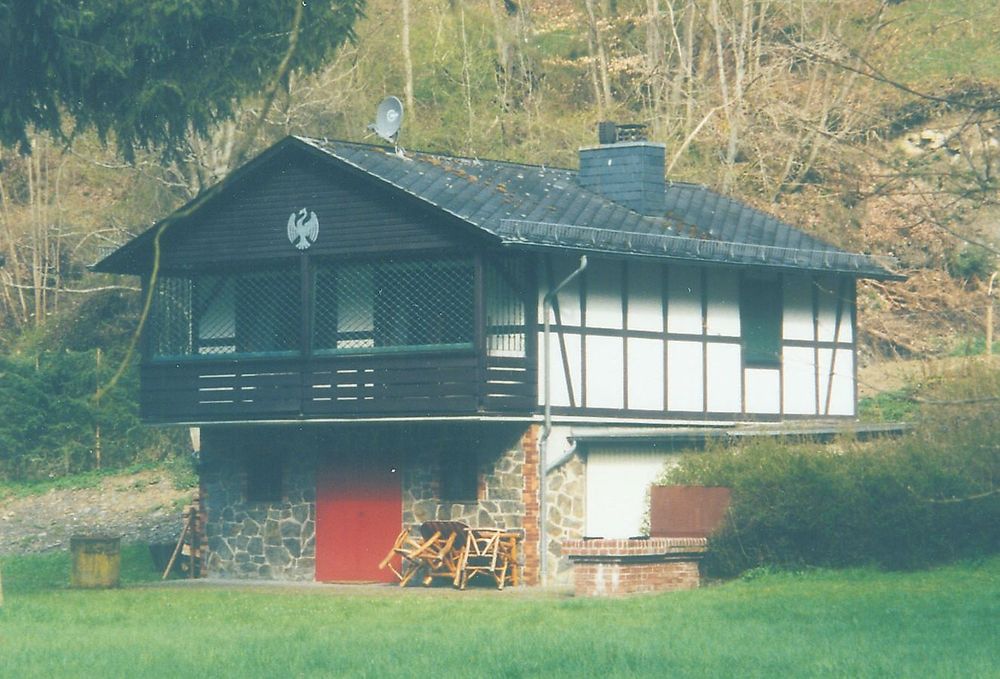
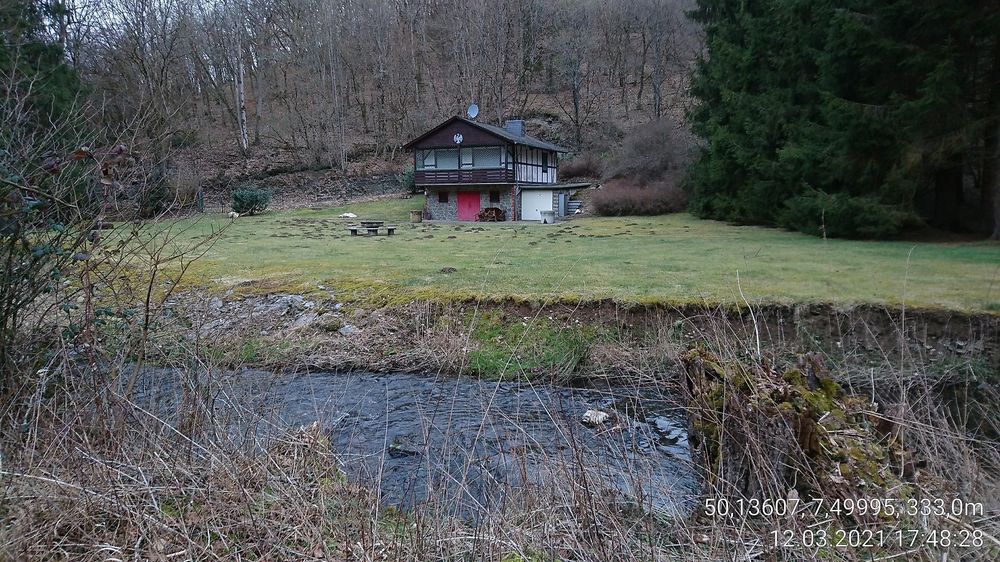
The Wool Mill or Krischers Mill
The wool mill that follows the Sunday mill was formerly called Krischers Mill and was a grain mill. However, it did not last long; as early as 1850, it is mentioned in old records as a "deserted site." But then, towards the end of the 19th century, new life awoke at the site. An enterprising businessman named F. W. Bäumer established a water-powered wool spinning mill at the former grinding facility. At that time, flax cultivation and sheep farming were widespread in the Hunsrück region.
On long winter evenings, spinning wheels whirred in many homes, where wool and yarn threads were spun. Initially, this was only for the production of their own clothing, but eventually, it was discovered that good money could be made with the yarn. A commercial yarn trade developed in the villages of the Vorderhunsrück. Numerous men and women traveled through the German lands with their "Kiepen" on their backs, earning good incomes from the sale of wool and yarn. School councilor Josef Klein reports in his small publication about the living conditions in the Vorderhunsrück that in 1906, 400, 150, and 95 people from the municipalities of Pfalzfeld, Obergondershausen, and Halsenbach went into the wool trade.
The owner of the wool mill took advantage of the increasing demand for wool. He built a small workshop on the Baybach, where he set up spinning machines powered by a water wheel. Thus, industry had reached the quiet Baybach Valley. In 1909, the spinning mill passed from owner Bäumer to the merchant Walter Werner Erich Müller from Kastellaun. However, the economic boom in the wool mill did not last long. At the beginning of the 20th century, flax cultivation and sheep farming declined. And when the Hunsrück was also supplied with electric power, the water-driven facilities became obsolete. Thus, the wool mill also had to cease operations. The buildings fell into disrepair, and a nature lover built a weekend house on the foundation walls.
Below the wool mill, we notice some cave entrances secured with an iron grate. These are former ore mines, of which there are still quite a few in the valley. Today, bats prefer to inhabit the caves. In the 19th century, people searched everywhere in the Hunsrück for ore rock. Here and there, they also found promising lead, zinc, and silver deposits, but overall, the yield was meager, so the operations were soon abandoned.
Excerpt from the book "From Mill to Mill" a hike through the Baybach Valley, available for 9.00 euros at the Tourist Information Emmelshausen