


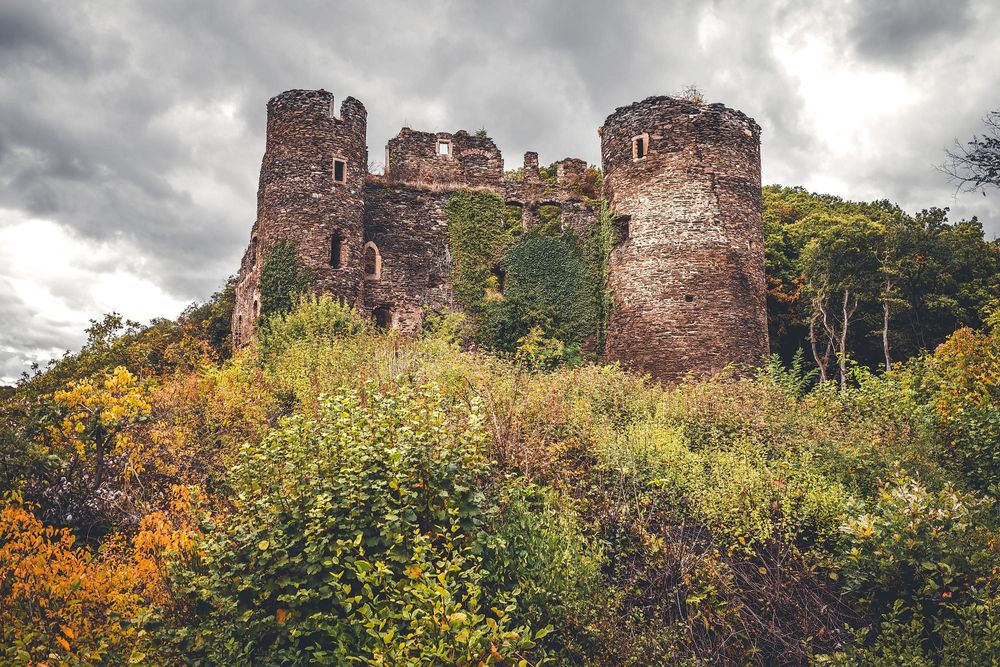
After passing through a narrow gatehouse, one arrives at the lower castle. Here, several building ruins stand with two sturdy round towers at the outer corners. Some buildings have been preserved as ruins. A staircase leads to the upper castle. Here, the ruins of the palace have been preserved, opposite which stands the keep. No entrance to the keep is visible, suggesting that it was significantly taller.
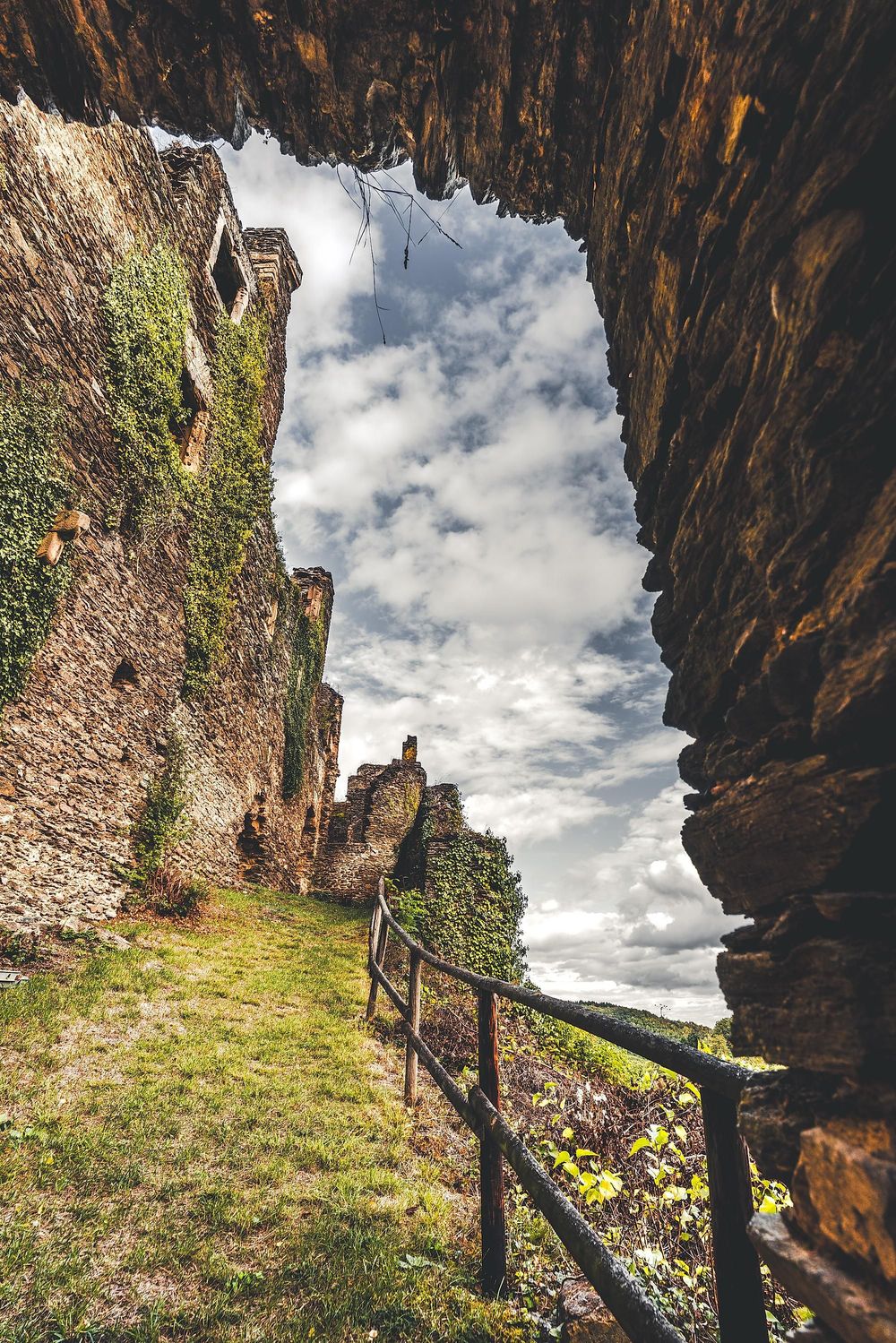
The entire main castle was surrounded by a high ring wall, which is still largely intact. Of interest in the west of the castle are two support pillars that once carried a water pipe, bringing fresh water from the higher terrain into the castle. In 1150, Godebold von Weyerbach built the castle and granted it as a fief to the Diocese of Speyer. The Weyerbach family then called themselves "von Dailberch." In the 14th century, the family died out with Anton von Dalberg. Around 1400, the chamberlains of Worms came into sole possession of Dalberg and added the name "called von Dalberg."
The descendants of the chamberlains of Worms, called von Dalberg, still own the castle ruins today.
The current owner is Prince zu Salm-Sahm und Dalberg. In the 19th century, the castle was misused as a quarry and fell into ruin.
Dalburg Castle Ruins
The massive castle is located on a mountain spur in the Gräfenbach Valley directly above the small village of Dalberg....
Categories
Contact details
Email: dalberg@vg-ruedesheim.de Phone: (+49)67061452 Website: http://www.gemeinde-dalberg.de
Opening hours
Monday: 00:00 - 23:59Tuesday: 00:00 - 23:59
Wednesday: 00:00 - 23:59
Thursday: 00:00 - 23:59
Friday: 00:00 - 23:59
Saturday: 00:00 - 23:59
Sunday: 00:00 - 23:59
Address
Gräfenbachstr. 29
55595
Dalberg
(DE)
Coordinates
Lat: 49.895996
Long: 7.729851
More information
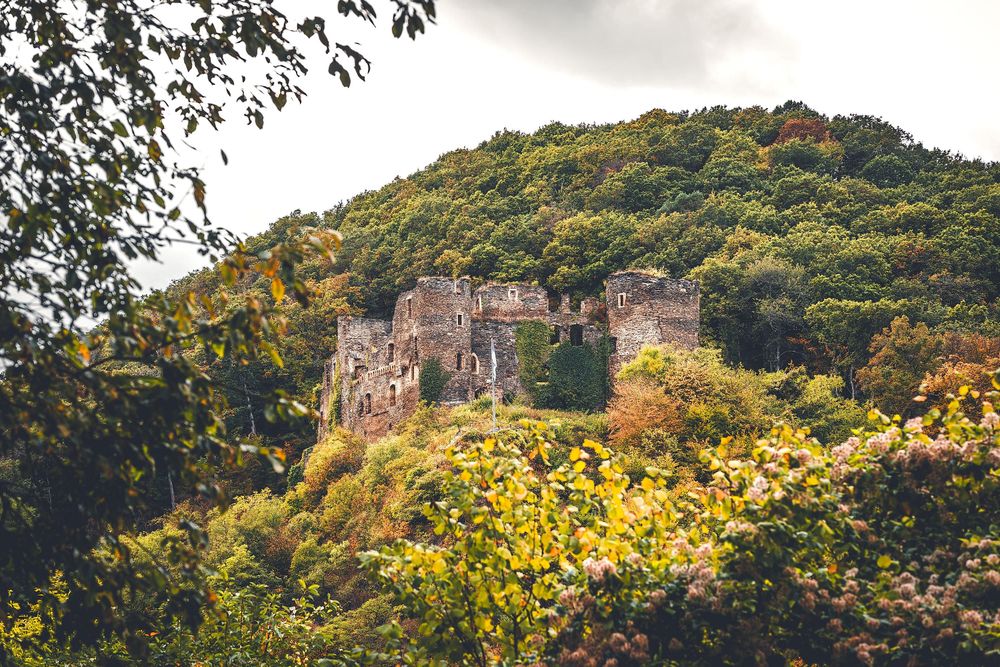
The massive castle is located on a mountain spur in the Gräfenbach Valley directly above the small village of Dalberg. The walls of the defensive structures, which once had three gates, have been preserved as well as the mighty ruins of the main castle.
After passing through a narrow gate area, one enters the lower castle. Here stand several building ruins with two sturdy round towers at the outer corners. Some buildings have been preserved as ruins. A staircase leads to the upper castle. Here, the ruins of the palace have been preserved, opposite which is the keep. No entrance to the keep can be seen, indicating that it was significantly taller.
The entire main castle was surrounded by a high ring wall, which is also still largely intact. Interesting are two support pillars in the west of the castle, which once carried a water pipe that brought fresh water from the higher terrain into the castle. In 1150, Godebold von Weyerbach built the castle and pledged it to the Diocese of Speyer. The Weyerbach then called themselves "von Dailberch". In the 14th century, the family died out with Anton von Dalberg. Around 1400, the chamberlains of Worms came into sole possession of Dalberg and added their name "called von Dalberg".
The descendants of the chamberlains of Worms, called von Dalberg, still own the castle ruins today.
The current owner is Prince zu Salm-Sahm and Dalberg. In the 19th century, the castle was misused as a quarry and fell into ruin.