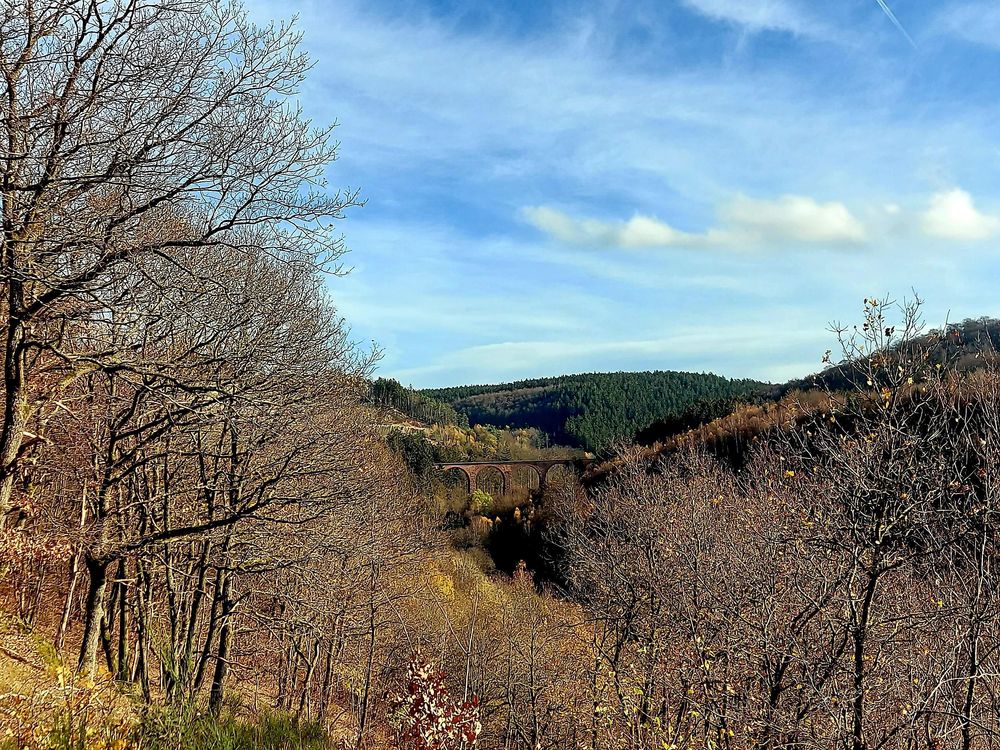
Hunsrückbahn Viaduct (Hoxel)

Hunsrückbahn Viaduct The railway viaduct near Hoxel is the most attractive structure of the...

An impressive structure


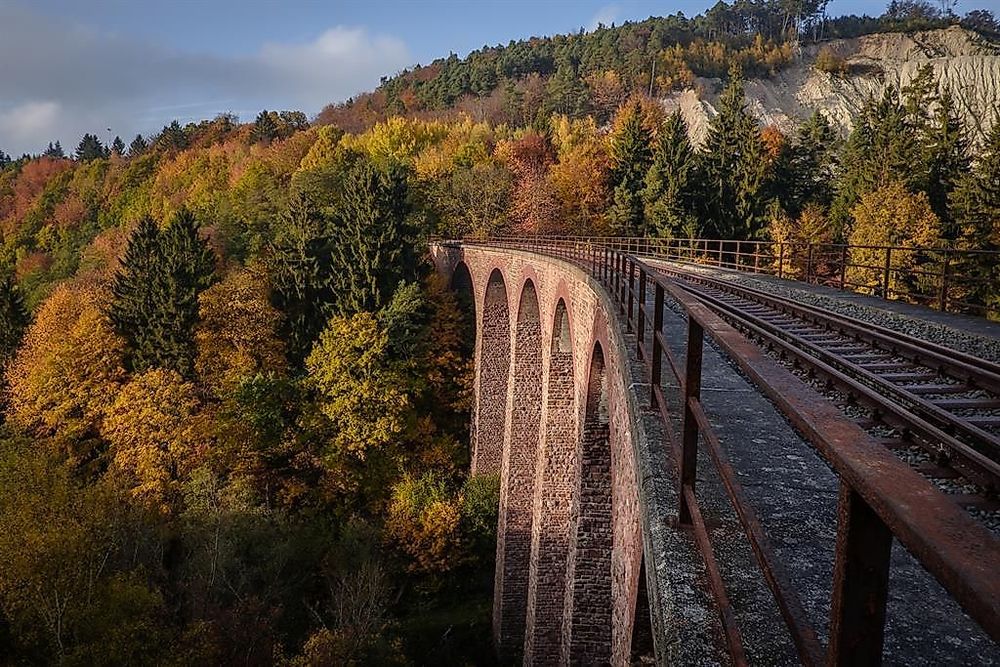
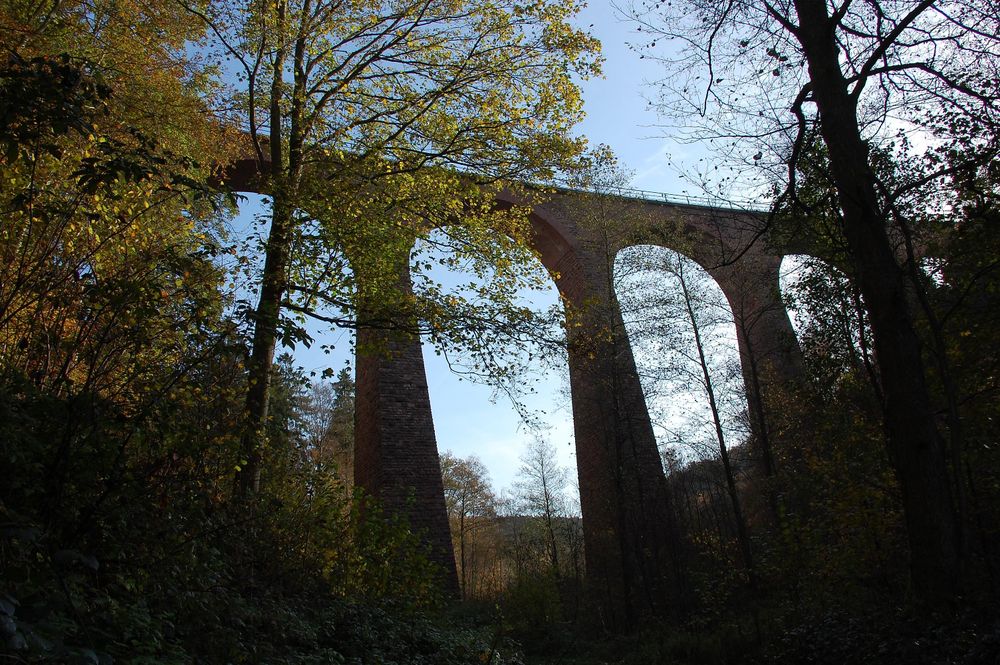
The imposing viaduct has a length of 160 m, a height of 42 m, and spans the valley floor with eight arches, each with a clear width of 16 m, making it one of the highest single-story stone railway bridges in Germany. The line and thus the viaduct were put into operation on October 1, 1903.
During World War II, the bridge was the target of numerous air raids multiple times. Several bomb craters, which now serve as biotopes, testify to this. After its destruction in World War II, restoration began. Thus, railway operations could be resumed on August 3, 1950.
On May 29, 1976, the last passenger train ran over the line. Later, private operators organized special trips over the scenically attractive route. After the fall of the
Hunsrückbahn Viadukt (Hoxel) j5hj02
Hunsrückbahn Viadukt (Hoxel) hsr4xx
Hunsrückbahn Viadukt (Hoxel) jeqby5

Categories

Excursion Buildings Historical Buildings Dog Friendly Picnic Area Sights
Contact details

Email: touristinfo@morbach.de Phone: (0049)6533 71-117 Website: http://morbach.de

Opening hours
Monday: 00:00 - 23:59
Tuesday: 00:00 - 23:59
Wednesday: 00:00 - 23:59
Thursday: 00:00 - 23:59
Friday: 00:00 - 23:59
Saturday: 00:00 - 23:59
Sunday: 00:00 - 23:59
Address

Bahnhofstraße 19
54497 Morbach (DE)

Coordinates

Lat: 49.764904
Long: 7.100251

More information

Hunsrückbahn Viaduct

The railway viaduct near Hoxel is the most attractive structure of the temporarily decommissioned “Hunsrückbahn,” as the route from Simmern to Hermeskeil was called.

To properly view the impressive structure from multiple perspectives, we recommend hiking the Viaduct Loop trail.
The trail starts at the sports field in Morscheid and leads for 5.2 km through a varied and picturesque landscape.

Please note that the viaduct is the property of Deutsche Bahn and for safety reasons it is not desired to enter the ice rink viaduct.


An impressive structure


The impressive viaduct has a length of 160 m, a height of 42 m, and spans the valley floor with eight arches of 16 m clear width each, making it one of the highest single-story stone railway bridges in Germany. The route and thus the viaduct were put into operation on October 1, 1903.
During World War II, the bridge was the target of numerous air raids multiple times. Several bomb craters, which today serve as biotopes, testify to this. After the destruction in World War II, restoration began. Thus, railway operations could be resumed on August 3, 1950.
On May 29, 1976, the last passenger train ran over the route. Later, private operators organized special trips over the scenically attractive route. After the fall of the “Iron Curtain,” freight traffic was also discontinued. Since then, there has been no train traffic over the route.