Monastery Visualization Hildegard of Bingen

"With the elevator to the past" - Virtual tour through the former monastery...


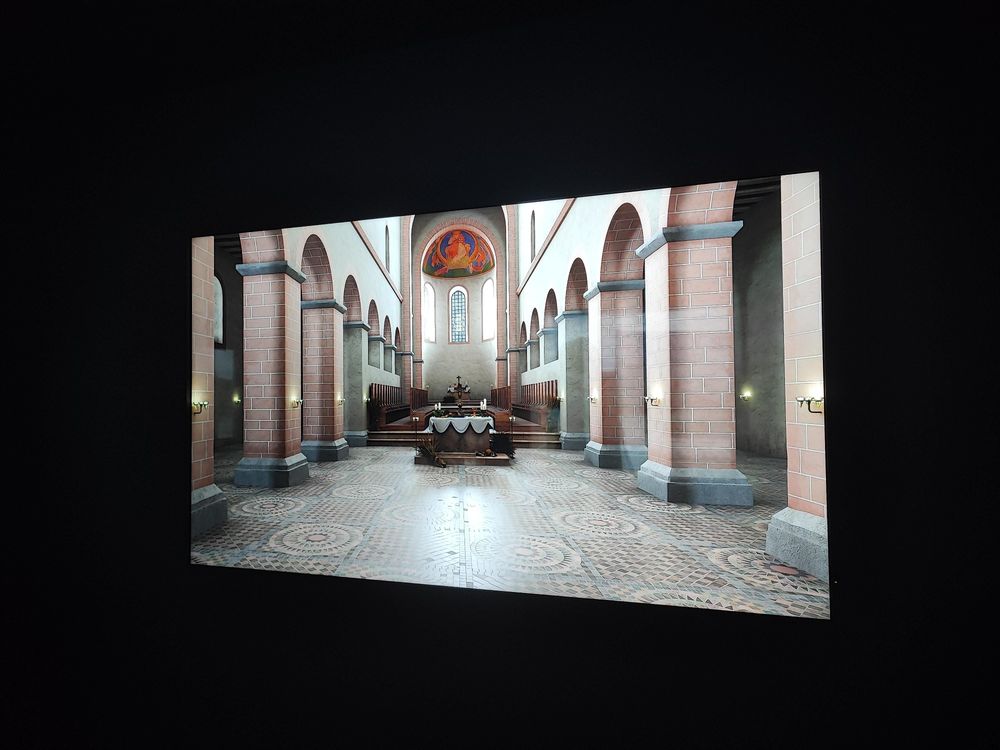
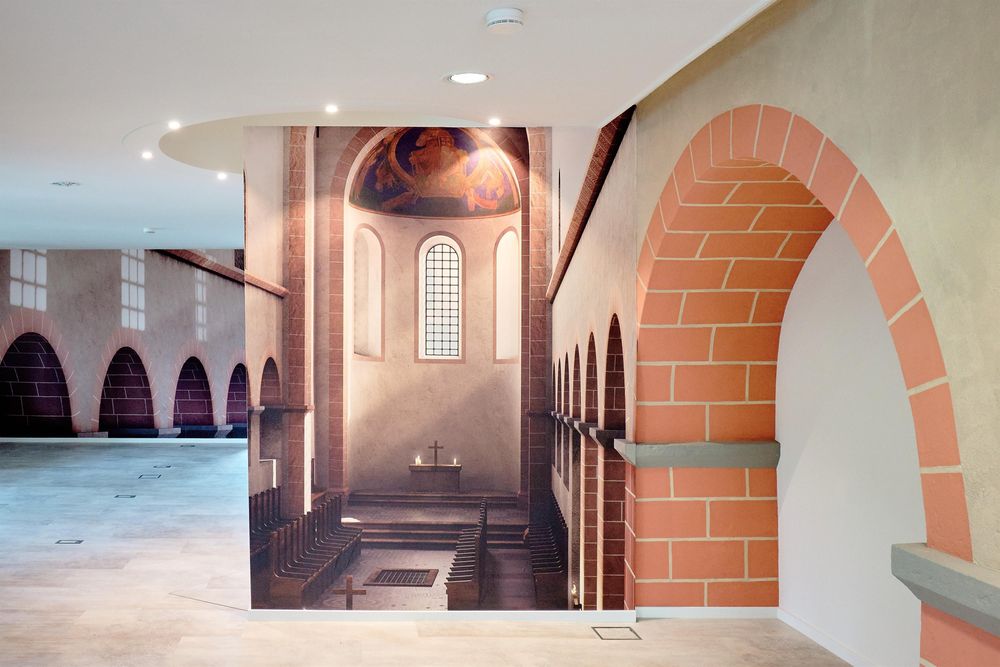
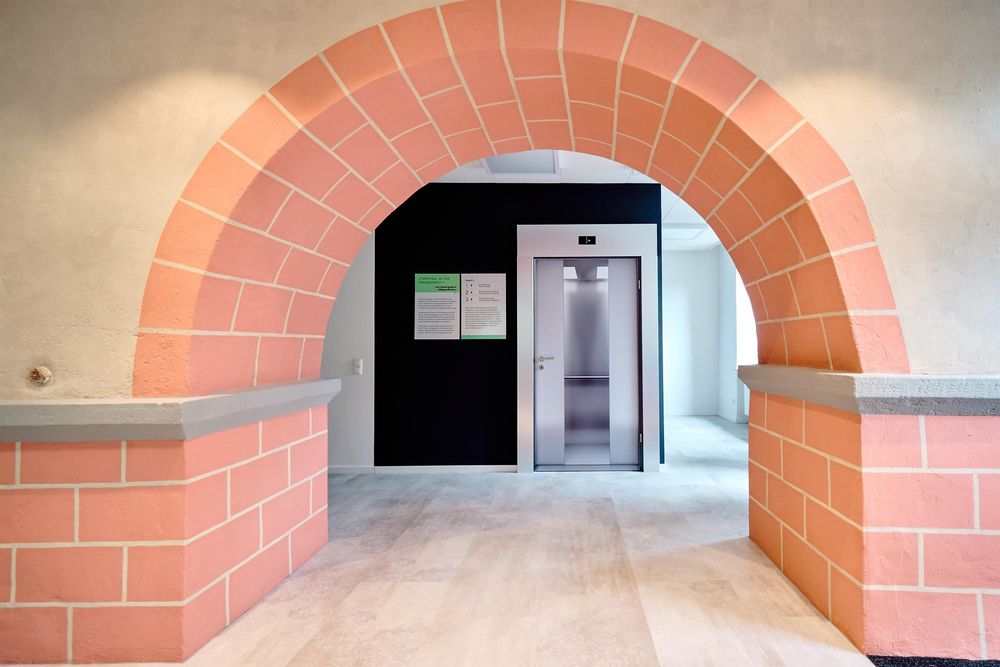
Hildegard von Bingen left her home monastery on the Disibodenberg between 1147 and 1151 and founded her monastery on the Rupertsberg by the Nahe River. During her nearly 30 years on the Rupertsberg, she wrote her major works. The monastery was destroyed during the Thirty Years' War. Only six pillars of the southern nave wall of the monastery church have survived. In the villa on the Rupertsberg, the vanished Hildegard monastery has been 'resurrected' based on the original monastery arcades from the Hildegard church and can be explored with all senses using digital technology: Experience how the lost choir is complemented by virtual reconstruction and a little optical illusion, allowing you to find yourself amidst the Hildegard church.

The 'elevator to the past' takes you right into the monastery as it may have looked in the 12th or 13th century. First, it descends to the church's walking level during Hildegard's time. Then you decide how to proceed: A tour through the church, into the cloister, and then out to the monastery courtyard? Or would you prefer to go straight up to the church tower to enjoy the view of high medieval Bingen?
Klostervisualisierung Hildegard von Bingen iok4xk
Klostervisualisierung Hildegard von Bingen e31q8f
Klostervisualisierung Hildegard von Bingen wny2zj
Klostervisualisierung Hildegard von Bingen y2uqkz

Categories

Excursion Excursion tips Buildings Spiritual Historical Historical buildings Churches/Monasteries Culture (season extension) Cultural tours Sights Folklore World Heritage
Contact details

Phone: +49 6721-184354

Opening hours
Monday: closed
Tuesday: 00:00 - 23:59
Wednesday: 00:00 - 23:59
Thursday: 00:00 - 23:59
Friday: 00:00 - 23:59
Saturday: closed
Sunday: 00:00 - 23:59
Address

Am Rupertsberg 16
55411 Bingen am Rhein (DE)

Coordinates

Lat: 49.966145
Long: 7.889174

More information

"With the elevator into the past" - Virtual tour through the former monastery Rupertsberg.


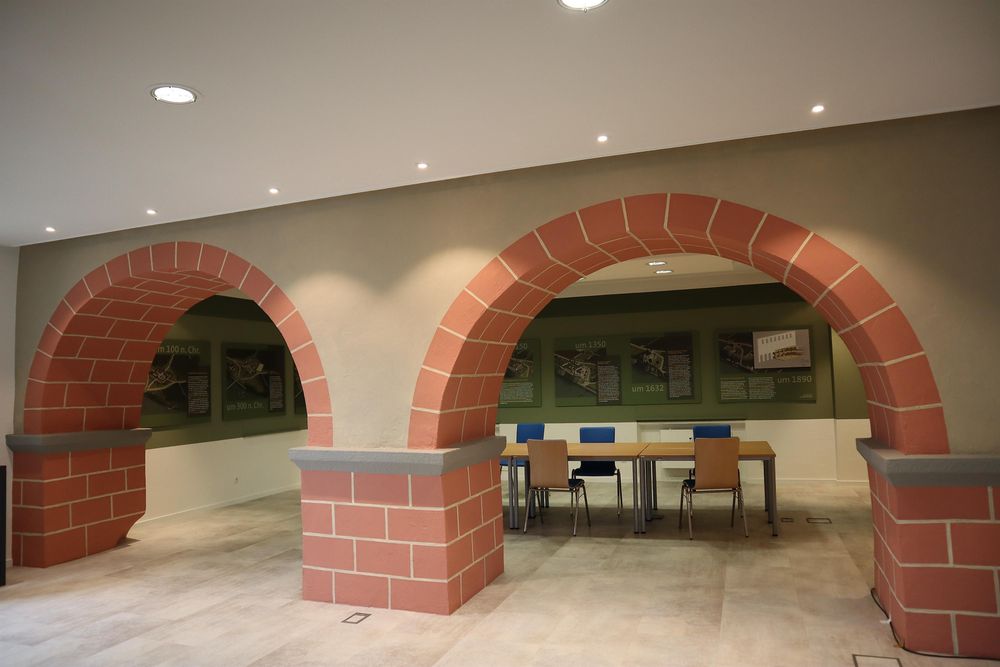
Hildegard of Bingen left her home monastery on the Disibodenberg between 1147 and 1151 and founded her monastery on the Rupertsberg by the Nahe. During her nearly 30 years on the Rupertsberg, she wrote her major works. During the Thirty Years' War, the monastery was destroyed. Only six pillars of the southern nave wall of the monastery church remain. In the villa at Rupertsberg, based on the original monastery arcades from the Hildegard Church, the vanished Hildegard Monastery has been "reborn" and can be explored with all senses using digital technology: Experience how the vanished choir, through virtual reconstruction and a little optical illusion, complements the original remains so that one finds oneself in the midst of the Hildegard Church.

The "elevator into the past" takes you right into the monastery as it may have looked in the 12th or 13th century. First, it goes down to the church's floor level during Hildegard's time. Then you decide how it continues: First a tour through the church, into the cloister, and then out to the monastery courtyard? Or would you rather go straight up to the church tower to enjoy the view of high medieval Bingen?
Hildegard of Bingen left her home monastery
on the Disibodenberg between 1147 and 1151 and founded by the Nahe her
monastery on the Rupertsberg.
"This monastery was not founded by an emperor or bishop, a powerful
or rich person of this earth, but by a poor, weak,
migrant woman. In a short time, in just 27
years, it has developed both in monastic spirit and in
external structure to such an extent that it is well ordered not through pompous,
but through stately and spacious buildings – suitable for
nuns – and by having laid a water pipe in all workspaces."
(Guibert of Gembloux, 1177). During her nearly 30 years on the
Rupertsberg, she wrote her major works. During the Thirty Years'
War, the monastery was destroyed. Only six pillars of the southern nave wall
of the monastery church remain, which can now be visited. Almost four centuries later, visitors can now immerse themselves in the era of the famous woman – at the
original site.

Step into the "elevator into the past" – the perfect illusion
as if you are actually entering the monastery. As part
of a visit to the Museum am Strom, admission is even free.