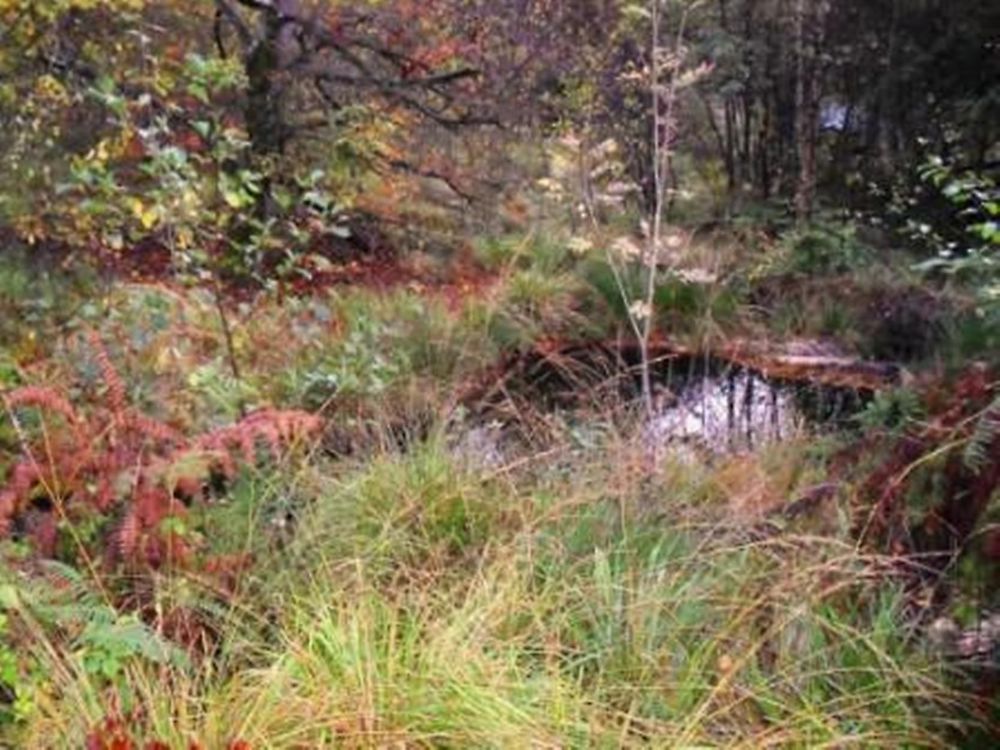
- A spring bog in the high forest -
The Weyrichsbruch, located in the Osburger Hochwald and covering almost 7 hectares, is commonly referred to as a high moor and is a nature-preserved spring bog owned by the state of Rhineland-Palatinate. All necessary maintenance work in the spring bog is carried out at the request of the responsible forestry office Hochwald based in Dhronecken. The Osburger Hochwald is situated in the core zone of the Saar-Hunsrück Nature Park.
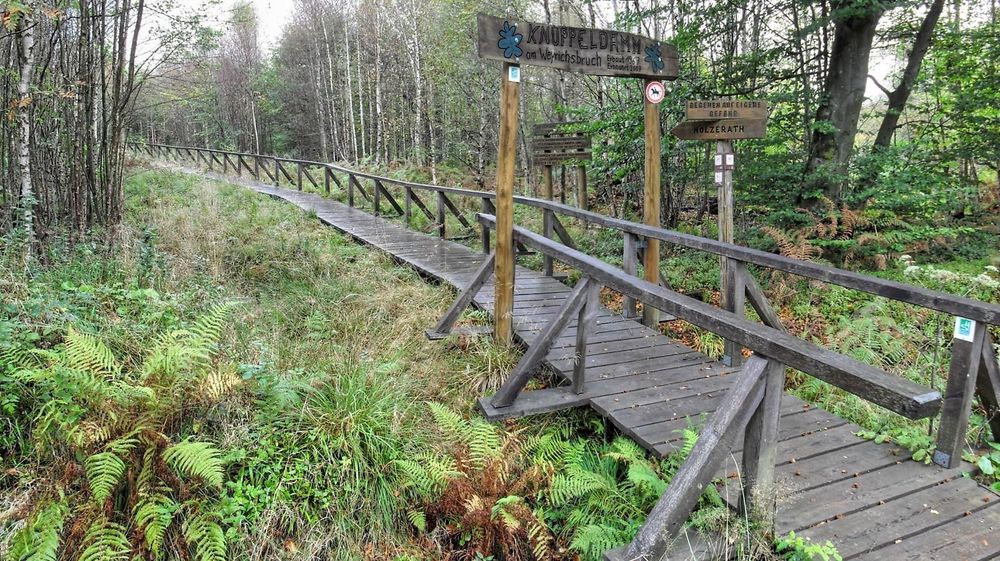
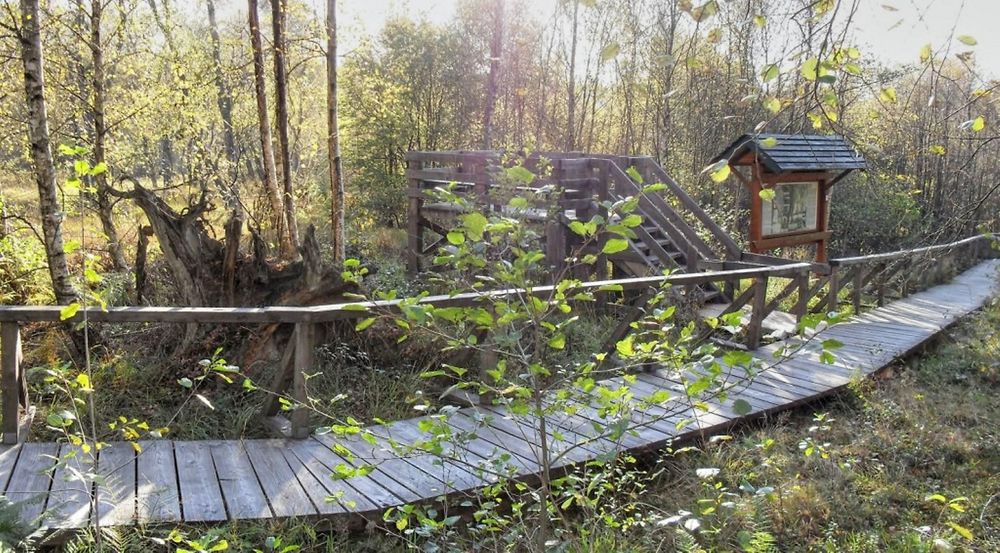
A 'knüppeldamm' built for the first time in 1968/69 with spruce round timber along a length of 300 m at the western edge of the spring bog allows visitors to walk through this slope failure without having to step on the valuable biotope.
Meanwhile, this knüppeldamm is not only part of the 10 km long Rösterkopf circular hiking trail but is also integrated into the premium hiking trail 'Saar-Hunsrück-Steig'.
About the history and development of the Weyrichsbruch
This area of the high forest is a geological part of the southwestern Rhineland slate mountains and can be attributed to the geological era of the Lower Devonian (about 400 million years ago). The formation of the slope bogs began during the Older Subatlantic period about 3000 years ago, as determined through extensive vegetation studies. In this part of the high forest, one can expect a layer of quartzite rock up to about 1000 m thick, in whose cavities groundwater collects, which emerges from the springs - often spring sources - with excellent water quality. Until the 18th century, the quartzite ridges of the Hunsrück were surrounded by a multitude of spring or slope bogs. However, to achieve better forestry use of these small bogs, drainage was initiated by creating extensive drainage systems and reforesting the bogs with spruces. The drainage ditches established between 1850 and 1870 are still clearly visible today.
Between 1935 and 1938, the existing drainage system was further expanded and simultaneously maintained.
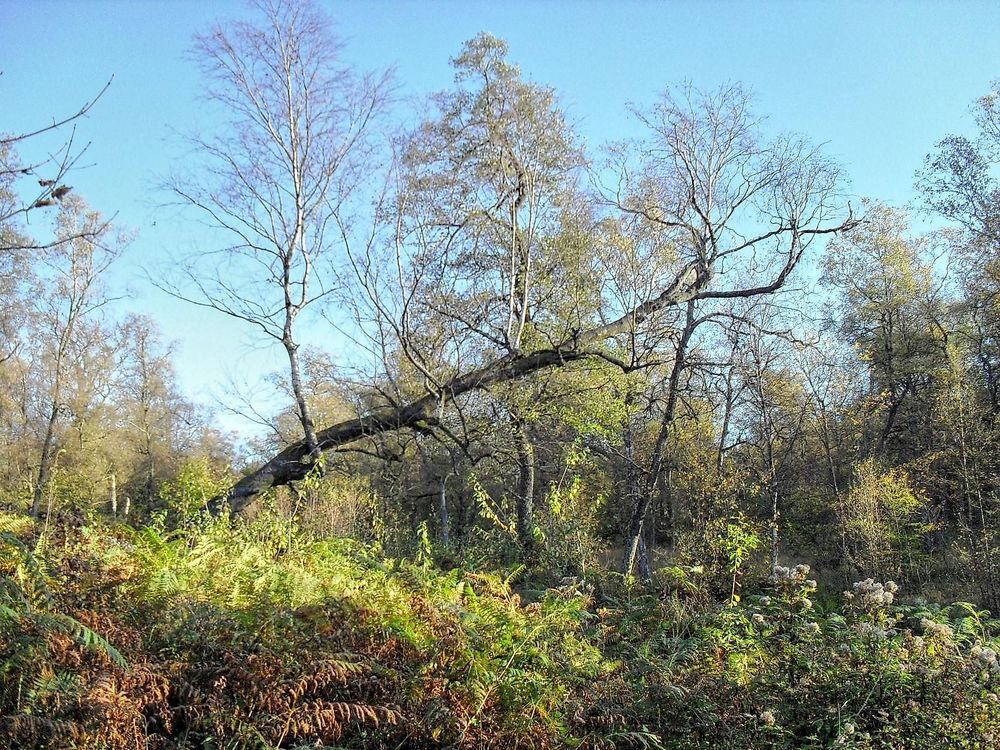
Through the herringbone-shaped design of the drainage ditches, reforestation with coniferous trees was to be facilitated. The last old spruces remaining from the reforestation activities in the Weyrichsbruch were removed in 1998, so that unwanted coniferous trees that were crowding the moor birch are no longer present today. In the following two years, larch round timber structures were installed in the drainage ditches to achieve a delayed water outflow and simultaneously raise the water level in the bog area. These ditch closures still require further observation and maintenance regarding their functionality, as well as supplementation, to ensure a stable development of the nature-preserved spring bog in the long term. In the area where the common bracken occurs, which represents an establishment blockade for other plant communities, 800 young moor birches were planted by the Hochwald forestry office.
Accessible year-round - Caution is especially advised in winter due to the risk of slipping!